
Bocce's Tech Evolution
Bocce ball, a game with roots stretching back to ancient Rome, has always been about skill, strategy, and luck. For centuries, it’s been played with simple equipment – eight balls and a pallino. Now, technology is integrating into this traditionally low-tech sport.
This shift goes beyond digital scoreboards. The influx of sensors, 'smart' balls, and sophisticated scoring systems changes how the game is played and officiated. Increased competition at all levels, from backyard games to professional tournaments, drives the demand for more precise and objective scoring. This aligns with the broader trend of sports tech enhancing experiences for players and spectators.
Recreational players are also drawn to removing scoring ambiguity. These new technologies aim to provide a definitive, data-driven answer, ending arguments over ball proximity to the pallino. While some embrace this change and others are skeptical, the trend is clear: bocce is entering a technologically advanced era.
The biggest initial driver was the desire for fairness. Bocce is a game of inches, and human judgment, even with careful measurement, can be subjective. Technology offers objective assessment of each throw.
AI-Enhanced Balls: What's Inside?
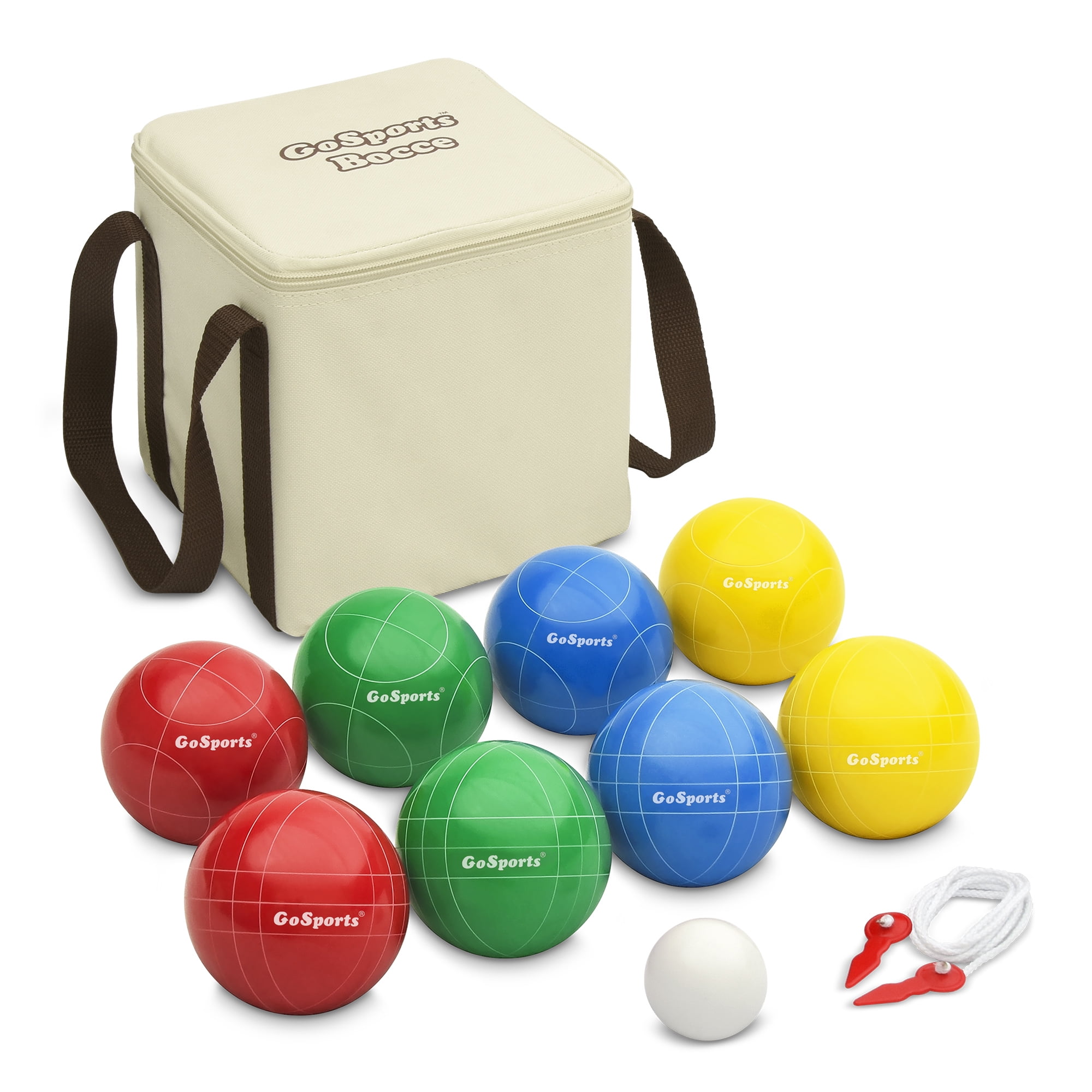
Smart bocce balls contain sensors designed to capture data. Common sensors include accelerometers, which measure acceleration, and gyroscopes, which track rotational velocity. These sensors determine the ball’s trajectory, speed, and spin.
Data collected by these sensors is transmitted wirelessly to a receiving device using Bluetooth Low Energy (BLE) technology for minimal power consumption. Packaging this technology into a ball that maintains the weight, size, and feel of a traditional bocce ball is an engineering challenge.
Battery life is a limitation, as sensors and communication modules require power. Fitting a sufficiently large battery into a bocce ball without affecting performance is tricky, and most smart bocce balls require regular charging. Durability is also a concern, as bocce balls are thrown on hard surfaces and exposed to the elements, requiring internal electronics to withstand rough treatment.
Accuracy is paramount. While sensors are accurate, external factors like temperature and humidity can influence readings. Manufacturers are working on algorithms to compensate for these variations, but improvement is still possible. Publicly available SDKs for raw sensor data are not yet common, though manufacturers may offer APIs for developers in the future.
Digital Scoring Systems: Beyond Manual Count
Digital scoring systems interpret the data captured by smart bocce balls. These systems, varying in complexity, aim to determine the proximity of each ball to the pallino and calculate the score using various algorithms.
Many systems use triangulation or proximity sensors to determine distance. More advanced systems incorporate computer vision and machine learning to analyze images of the playing field, identifying balls, the pallino, and court boundaries for automated scoring. Manufacturers constantly refine proprietary algorithms to improve accuracy.
Two main approaches exist for digital scoring. One transmits ball data wirelessly to a central hub or app for processing and score display. The other uses external sensors or cameras to track ball positions. Wireless systems are portable but rely on reliable communication. Camera-based systems offer a broader view but require good lighting and a clear line of sight.
Accuracy rates vary, though most manufacturers claim accuracy within a centimeter. Real-world performance can be affected by ball wear, surface irregularities, and environmental conditions. A good scoring system also needs a crucial, easy-to-understand user interface, even for non-tech-savvy players, with a clear display to minimize confusion and ensure a smooth experience.
- Proximity Detection: Uses sensors to measure the distance to the pallino.
- Triangulation: Determines position based on signals from multiple sensors.
- Computer Vision: Analyzes images to identify balls and their positions.
- Machine Learning: Improves accuracy over time by learning from past data.
Digital Bocce Scoring System Comparison - 2026
| System Name | Ease of Setup | Accuracy | Dispute Resolution | Weather Resistance | Price Range |
|---|---|---|---|---|---|
| ScoreSense Bocce | Simple, utilizes pre-calibrated court markers | High, uses optical sensors for precise point determination | Video replay feature, allows for review of close calls | Designed for moderate weather conditions; susceptible to direct rain | Medium |
| BocceTech Pro | Moderate, requires initial court mapping | Very High, integrates with AI for ball proximity calculations | Offers a 'Challenge' function with multiple camera angle review | Highly durable, rated for all-weather use | High |
| CourtCall Bocce | Easy, app-based system with minimal hardware | Good, relies on user input with automated validation | Provides a 'Fair Play' protocol for user agreement on scores | Moderate, splash resistant but not fully waterproof | Low |
| Precision Bocce System | Moderate, requires Bluetooth connection to multiple sensors | High, uses inertial measurement units within the balls themselves | Offers a scoring consensus feature, averaging multiple user inputs | Good, sensors are sealed for protection against moisture | Medium to High |
| SmartBocce AI | Complex, requires extensive court calibration and network setup | Potentially Very High, claims AI-powered point prediction based on ball trajectory | Automated dispute resolution based on AI analysis, subject to user override | Designed for indoor courts, limited outdoor usability | High |
Illustrative comparison based on the article research brief. Verify current pricing, limits, and product details in the official docs before relying on it.
Accuracy & Fairness: Addressing Concerns
Introducing technology into any sport raises questions about fairness and cheating. With smart bocce, concerns arise about sensor malfunctions during crucial points and system bias or manipulation.
Calibration is essential for accurate readings. Smart bocce systems need regular calibration, verification of sensor accuracy, and algorithm adjustments. Regular maintenance, including software updates and hardware checks, is also necessary. Manufacturers should provide clear instructions for calibration and maintenance.
Cheating is a legitimate concern, as players might tamper with balls or the scoring system for an unfair advantage. Manufacturers incorporate security features like tamper-evident seals and encrypted data transmission, but the risk cannot be entirely eliminated.
Transparency is key. Players should have access to sensor data and scoring algorithms to verify results and identify discrepancies. Technology is a tool that can be used responsibly and ethically by players and officials.
Current Smart Bocce Brands
The market for smart bocce equipment is new, with several brands emerging. BuyBocceBalls.com and BocceSupplies.com offer selections, though detailed specifications and pricing can be limited for newer products.
BocceSupplies.com focuses on traditional bocce sets but offers digital scoreboards. These scoreboards are versatile and can be used with any bocce set, providing a
Amazon.com lists a wide variety of bocce sets, including some that claim to be 'smart' or feature enhanced tracking. However, many of these listings lack detailed technical specifications. It's important to read reviews carefully and verify the features before making a purchase. Prices range widely, from basic sets under $50 to more advanced sets exceeding $200.
While specific 'smart ball' brands are still emerging, several companies are developing technologies for ball tracking and scoring. These often involve attaching sensors to existing bocce balls, rather than creating entirely new balls. This approach offers a more affordable way to upgrade your existing equipment. I haven't found a brand that consistently offers a complete, integrated 'smart ball' system as of late 2026, so the market is still maturing.
- BocceSupplies.com: Offers digital scoreboards, but not integrated smart balls.
- Amazon.com: Wide selection of bocce sets, including some with claimed 'smart' features.
- Emerging Brands: Several companies developing sensor attachments for existing bocce balls.
Smart Bocce Considerations
- AI-Enabled Bocce Balls - Several manufacturers, including Delizio Bocce, are exploring sensor integration within bocce balls to track trajectory and spin. These balls aim to provide data for post-game analysis, though widespread adoption is still developing.
- Electronic Measuring Tools - Digital calipers, like those from iGaging, can provide precise measurements of ball proximity for scoring disputes. While not specifically for bocce, their accuracy surpasses manual methods.
- Portable Scoring Tablets - Standard tablets (Apple iPad, Samsung Galaxy Tab) paired with a scoring app (many general sports scoring apps are adaptable) offer a digital alternative to manual scorekeeping. Consider ruggedized options for outdoor use.
- Bluetooth-Connected Scoreboards - Companies like ScoreVision offer modular LED scoreboards that can potentially integrate with scoring apps via Bluetooth, displaying the current score in real-time. Custom integration may be required.
- GPS Tracking Devices (for courts) - While not directly bocce-specific, small GPS trackers (Tile Mate, Apple AirTag) can be attached to the pallino to help locate it quickly, especially on larger or uneven playing surfaces.
- Action Cameras for Analysis - GoPro and DJI Osmo Action cameras can record games from multiple angles, allowing players to review throws and strategize. Video analysis software (like Kinovea, a free option) can then be used for detailed examination.
- Weatherproof Bluetooth Speakers - For integration with scoring apps that provide audio cues, consider durable, weatherproof Bluetooth speakers from brands like JBL or Bose to clearly announce scores or game updates.
Standout Features & Innovations
Beyond the basic functionality of automated scoring, some smart bocce systems are incorporating truly innovative features. Real-time data analysis is one example. Some systems track players' throwing patterns, providing insights into their technique and consistency. This data can be used to identify areas for improvement and optimize performance.
Integration with social media platforms is another interesting development. Players can share their scores and stats with friends and family, creating a more social and competitive experience. This can also help to promote the sport and attract new players. A few systems are experimenting with augmented reality overlays, projecting virtual guides onto the playing field to help players aim their throws.
Perhaps the most promising innovation is the development of advanced dispute resolution algorithms. These algorithms use complex mathematical models to analyze the data and determine the most likely outcome in close calls. This can help to avoid arguments and ensure fair play. These features aren’t yet commonplace, but they represent the direction the technology is heading.
I'm particularly excited about the potential for personalized coaching systems. Imagine a system that analyzes your throwing technique and provides customized feedback, helping you to improve your game. This could revolutionize the way bocce is taught and played.
The Future of Smart Bocce
The future of smart bocce is full of possibilities. We can expect to see continued improvements in sensor technology, battery life, and accuracy. Artificial intelligence (AI) will likely play an increasingly important role, powering personalized coaching systems and advanced dispute resolution algorithms.
Augmented reality (AR) could also transform the playing experience. Imagine using AR glasses to see virtual guides, projected trajectories, and real-time scoring information overlaid onto the playing field. This could make the game more engaging and immersive. Integration with other sports technologies is another potential avenue for innovation. Perhaps we’ll see smart bocce balls compatible with fitness trackers or performance monitoring apps.
The limits are really determined by the cost of the technology and the willingness of players to embrace it. As the price of sensors and processing power continues to fall, smart bocce equipment will become more accessible to a wider audience. It’s an exciting time to be a bocce player, and I’m eager to see what the future holds.
- AI-Powered Coaching: Personalized feedback and technique analysis.
- Augmented Reality Overlays: Virtual guides and real-time scoring information.
- Integration with Fitness Trackers: Monitor performance and track progress.
- Advanced Dispute Resolution: AI-driven algorithms for fair play.


No comments yet. Be the first to share your thoughts!