

Bocce Ball Court Dimensions for a Backyard Setup
The first question most homeowners ask is simple: how much space do I actually need? Unlike tennis or pickleball, bocce is forgiving about exact measurements, which is both a blessing and a curse. You can build a functional court in a tight corner, or you can dedicate an entire side yard to a full-scale installation.
Regulation courts, as defined by the United States Bocce Federation, measure 91 feet long by 13 feet wide. This size accommodates tournament play and ensures consistent ball behavior. However, for a backyard setting, this footprint is often impractical. Most residential yards simply don't have the clearance, and the visual impact of a 91-foot rectangle can dominate a landscape.
For recreational play, the standard recommendation shifts to a smaller footprint. A court between 40 and 60 feet long and 10 to 13 feet wide offers the best balance of playability and space efficiency. This size allows for proper throwing technique without requiring a marathon run to retrieve the pallino. Courts as small as 30 feet long can still be fun for casual play, though they feel cramped for serious games.
Width is less flexible than length. Even in smaller courts, maintaining a width of at least 10 to 12 feet is crucial. This ensures players have enough room to approach and throw without stepping on the sidelines. If you squeeze the width below 10 feet, the game becomes frustratingly tight, and balls frequently fly out of bounds.
When planning your layout, think of the court as a playing field, not just a rectangle. You need clearance on all sides for players to move freely. A good rule of thumb is to add at least 3 to 5 feet of extra space on each end and 2 to 3 feet on each side. This buffer zone prevents collisions and makes the game feel open and enjoyable.
Consider your yard's shape before finalizing dimensions. Irregular spaces might require a custom rectangular cut or even a modified shape. The goal is to create a surface that feels natural to play on, not just a set of numbers on a blueprint. Start with the available space, then adjust the court size to fit, rather than forcing a standard dimension into a square peg.
Bocce ball court dimensions tradeoffs
Choosing the right size for your backyard bocce court involves balancing the official standards against the physical constraints of your property. While regulation courts are massive, residential setups offer flexibility that can actually improve the game for casual players. Understanding these tradeoffs helps you avoid building a court that is either too small to play properly or too large for your available space.
The most common backyard bocce court size is 60 feet long by 12 feet wide. This dimension fits comfortably in many residential yards while providing enough room for strategic shots and proper ball travel. It serves as a practical middle ground, offering a game experience that feels authentic without requiring a significant land investment.
For those with limited space, courts can shrink to 40 feet long and 10 feet wide. This compact size is ideal for smaller backyards or patio areas. While it restricts long-distance shots, it increases the frequency of rallies and makes the game more accessible for children or beginners who may struggle with the precision required on a larger court.
On the other end of the spectrum, some enthusiasts build courts up to 91 feet long and 13 feet wide to mimic regulation size. This requires a substantial yard and careful planning for leveling and drainage. The benefit is a true-to-form playing experience, but the tradeoff is the increased cost of materials and the maintenance effort required to keep a large surface flat and smooth.
| Feature | Compact (40' x 10') | Standard (60' x 12') | Regulation (91' x 13') |
|---|---|---|---|
| Best For | Small yards, beginners | Average backyards | Serious players, clubs |
| Space Required | Minimal | Moderate | Extensive |
| Game Pace | Fast, high rally | Balanced | Strategic, longer |
| Installation Cost | Low | Moderate | High |
| Drainage Needs | Low | Moderate | High |
| Feature | Compact (40' x 10') | Standard (60' x 12') | Regulation (91' x 13') |
|---|---|---|---|
| Best For | Small yards, beginners | Average backyards | Serious players, clubs |
| Space Required | Minimal | Moderate | Extensive |
| Game Pace | Fast, high rally | Balanced | Strategic, longer |
| Installation Cost | Low | Moderate | High |
| Drainage Needs | Low | Moderate | High |
The width of the court also plays a critical role in gameplay. A 10-foot width is sufficient for casual play but can feel cramped if players are standing close together. A 12-foot width provides more breathing room, allowing players to move around the court without interfering with each other. This extra foot can make a significant difference in comfort and safety, especially during competitive matches.
Ultimately, the best court dimensions are those that fit your lifestyle. If you plan to host large tournaments, a regulation-sized court is worth the investment. For weekly family gatherings, a standard or compact court will likely provide more enjoyment and less hassle. Consider how often you will use the court and who will be playing when making your final decision.
How to choose the right bocce court size
A regulation bocce court is 91 feet by 13 feet, but that footprint rarely fits a standard suburban backyard. Most home courts are significantly smaller, ranging from 40 to 60 feet in length. The width typically stays between 10 and 13 feet to maintain the game's geometry without consuming too much lawn space. Choosing the right dimensions means balancing official rules with your available square footage.
Start with the length
Length is the most critical dimension because it determines how far players must throw. A full-length court allows for complex strategy and precise placement, while a shorter court turns the game into a faster, more casual affair. If you have less than 60 feet, you can still play a fun version, but you will lose the ability to execute long-distance shots. Measure your yard first, then subtract space for the border and any surrounding walkways.
Set the width
The width of a bocce court is much more forgiving. While 13 feet is standard, you can shrink this to 10 feet in tight spaces without ruining the experience. This narrow width is sufficient for recreational play and keeps the court compact. Just ensure there is at least a few feet of clearance on all sides so players have room to approach the line without stepping on the court boundaries.
Plan for the border
The playing surface is not the only thing that needs measurement. You must account for the border, which keeps the court defined and protects the edges. A standard border is about 6 to 12 inches wide. If you are using artificial turf, the border might be a different material, such as wood or stone, which adds to the total footprint. Always add this width to your internal court measurements to get the total excavation or installation area.
Consider the surface
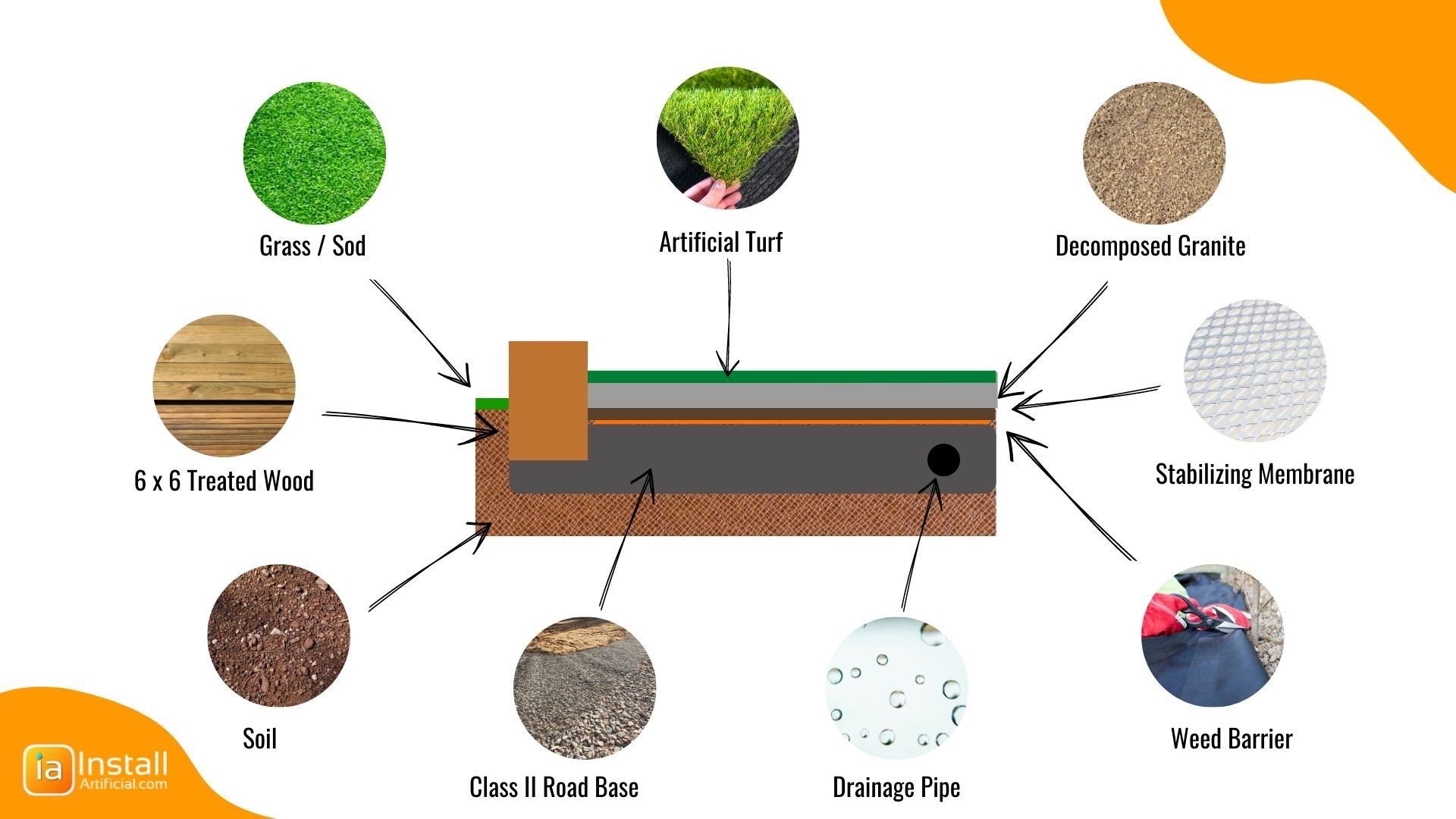
The type of surface you choose affects the final dimensions slightly. Natural dirt or crushed stone requires a compacted base that may need additional depth. Artificial turf, which is popular for backyard setups, lays flat and requires less excavation. However, the turf itself needs a stable sub-base. Ensure your chosen material can be installed within your planned dimensions without requiring major grading changes.
Finalize the layout
Once you have your length and width, draw a rough outline in your yard using stakes and string. This visual aid helps you see if the court fits alongside other backyard features like pools, decks, or gardens. It also reveals any obstacles, such as trees or slopes, that might interfere with play. A flat surface is ideal, but slight grading can be managed during installation.
Common Bocce Court Mistakes to Avoid
Many homeowners assume that a "bocce court" must meet official tournament standards, leading to unnecessary expense and spatial strain. The International Bocce Federation specifies a regulation size of 91 feet by 13 feet, but this is rarely practical for residential yards. Treating a backyard space like a professional venue often results in a court that feels cramped rather than inviting.
The most frequent error is ignoring the necessary perimeter space. A common mistake is building the court to the exact length and width of the playing surface. You must account for the "out-of-bounds" area where players stand to throw the pallino and bocce balls. Without this buffer, players will frequently step on the court lines or collide with fences, disrupting the game flow.
Another misleading claim is that smaller courts are invalid. Recreational courts can be as narrow as 10 to 13 feet and as short as 40 feet. These dimensions work well for casual play and can even double as putting greens. However, if you plan to host competitive matches, shrinking the court too much will significantly alter the physics of the throw, making precise placement nearly impossible.
Check local zoning regulations before breaking ground. Some municipalities have strict rules about permanent structures or hard surfaces in residential areas. A simple gravel or crushed stone base is often sufficient and easier to permit than a full concrete pour. Always prioritize a flat, level foundation over excessive length; a well-prepared 40-foot court is far more enjoyable than a poorly graded 91-foot one.
No comments yet. Be the first to share your thoughts!