
Bocce ball strategies for 2026
Before you step onto the court, align your equipment and rules with your playing style. Bocce is less about brute force and more about spatial control. You need to know the basics before you can master the finer points of scoring and placement.
Check your court and balls
Ensure the court surface is level and free of debris. Uneven ground ruins even the best throws. Match your ball weight to the court size. Heavier balls hold their line better on long, hard courts, while lighter balls offer more finesse on clay or grass.
Know the starting procedure
A coin flip decides which team throws the Pallino (the small target ball) first. The throwing team must place their feet behind the foul line. The ball must roll underhand past the half-court line. If it stops short or goes out of bounds, it is a foul.
Learn the two core rules
- No high throws: For safety, no ball may be thrown higher than the overhead lights. Keep your trajectory low.
- Backboard contact: A ball cannot touch the back wall unless it makes contact with a ball in play first. Hitting the wall directly is a foul.
Understand the scoring shot
The goal is to place your balls closest to the Pallino. Points are awarded only to the team with the closest ball. If your ball is closer than the opponent’s nearest ball, you score one point for every ball that is also closer. This makes positioning more valuable than knocking balls away.
Work through the steps
Bocce Ball Strategies for works best as a clear sequence: define the constraint, compare the realistic options, test the tradeoff, and choose the path with the fewest hidden costs. That order keeps the advice usable instead of decorative. After each step, pause long enough to check whether the recommendation still fits the reader's actual situation. If it depends on perfect timing, unusual access, or a best-case budget, include a simpler fallback.

Fix Common Bocce Ball Mistakes
Even experienced players lose points to preventable errors. Most lost matches come down to three recurring issues: throwing too hard, ignoring the court geometry, and neglecting basic foot placement. Fixing these habits instantly improves your scoring consistency.
Throwing with Too Much Force
New players often treat bocce like bowling, launching the ball with maximum velocity. This approach rarely works on the gravel or clay surface. A high-speed throw bounces unpredictably, often sending the pallino off the court or knocking your own balls into the back wall.
Instead, focus on a smooth, underhand roll. Let the ball’s momentum carry it naturally. If you are playing close bocce, a gentle touch is essential. If you need to displace an opponent’s ball, a controlled "spocking" shot uses force, but it is still a roll, not a throw.
Ignoring Court Boundaries and Geometry
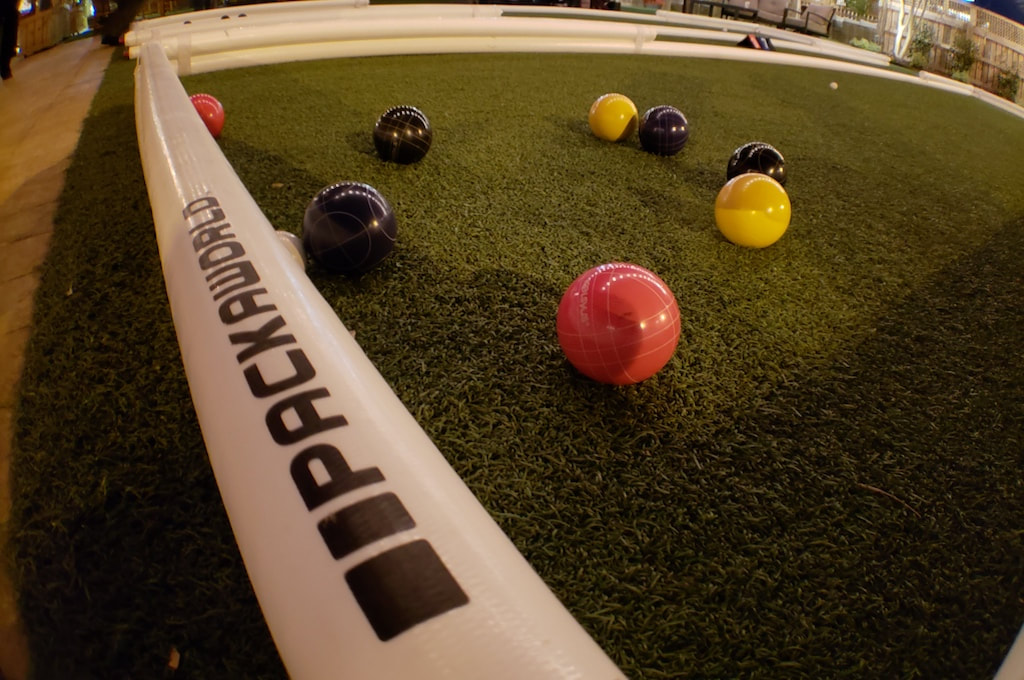
Many players aim directly at the pallino without considering the court’s layout. On a court with a backboard, hitting the wall first is a foul unless you have already contacted a ball in play. This mistake costs you possession and often gives your opponent a free shot.
Always check the court boundaries before every throw. If there is no backboard, aim for the center of the remaining playing area. Use the edges of the court to your advantage by banking shots off the side walls when the direct path is blocked.
Foot Faults and Improper Stance
A foot fault occurs when any part of your foot crosses the foul line during the throw. This is a common error that results in a dead ball. To avoid this, keep your feet firmly behind the line until the ball leaves your hand.
Adopt a stable, balanced stance. Keep your knees slightly bent and your body facing the target. This posture ensures consistent release points and reduces the risk of accidental fouls.
No comments yet. Be the first to share your thoughts!