

Get bocce ball right
Use this section to make the Master the Bocce Ball Rule Updates decision easier to compare in real life, not just on paper. Start with the reader's actual constraint, then separate must-have requirements from details that are merely nice to have. A practical choice should survive normal use, maintenance, timing, and budget. If a recommendation only works in an ideal situation, call that out plainly and give the reader a fallback path.
The simplest way to use this section is to write down the must-have criteria first, then compare each option against those criteria before weighing nice-to-have features.
Work through the steps
Playing bocce ball correctly starts with understanding the setup and the throw. The game relies on precision, not power. Follow this sequence to ensure every point counts and you avoid common fouls.

Bocce uses two teams of two or four players. Each team gets four heavy bocce balls. The game begins by tossing the small white target ball, called the pallino, onto the court. The pallino must land between the short and long foul lines. The team that tosses the pallino also throws the first bocce ball. This order is fixed for the first round of every game.

Precision starts with your stance. All players must stand behind the foul line when releasing any ball. You cannot step over the line, but your toe can touch it. If your foot crosses the line before the ball leaves your hand, it is a foul. For the first foul, you get a warning. For subsequent fouls, the opposing team gets two points.
Most beginners try to hit the opponent’s balls away. The better strategy is to throw your ball as close to the pallino as possible. This is called pointing. If you cannot place your ball precisely, you can use the thrower technique to knock an opponent’s ball out of scoring range. Always keep the pallino in mind as your primary target.
Only the team with the ball closest to the pallino scores points. Count how many of your balls are closer than the opponent’s nearest ball. That total is your score for the round. The first team to reach 12 points wins the game, but they must win by at least two points. If the score is tied at 11, play continues until one team leads by two.
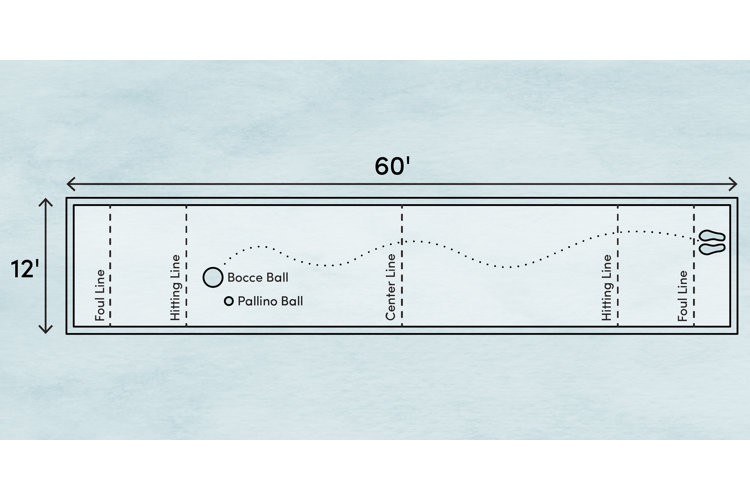
After a round ends, the team that did not score last round tosses the pallino for the next round. This rotation keeps the game fair. If the same team scores multiple rounds in a row, the other team gets consecutive chances to toss the pallino. Keep track of who throws next to avoid confusion.
-
Stand behind the foul line for every throw
-
Aim for the pallino before hitting opponent balls
-
Count only the balls closer than the opponent’s nearest
-
Rotate the pallino thrower if you did not score last round
-
Ensure the winning team leads by two points
Fix common bocce ball mistakes
Most players lose points not because they lack power, but because they ignore the basics of positioning and release. These errors compound quickly, turning a competitive game into a frustrating exercise in missed opportunities. By focusing on the physical mechanics of the throw and the spatial awareness of the court, you can stabilize your score and control the flow of the match.
Leaning too far forward
A common error is leaning your entire upper body over the foul line during the release. This shift in center of gravity often causes the foot to cross the line, resulting in a foul. Even if the foot stays clear, the instability makes it nearly impossible to judge the ball’s trajectory accurately.
Keep your stance upright and balanced. Your weight should remain centered over your feet until the ball is fully released. Think of your body as a stable platform rather than a projectile. This posture ensures consistent release points and reduces the risk of accidental fouls.
Releasing the ball too early
Another frequent mistake is releasing the bocce ball while it is still moving forward in the throwing arc. This "push" motion adds unwanted forward momentum, causing the ball to overshoot the pallino or hit the side wall of the court. The ball needs to drop into its natural arc to roll smoothly toward the target.
Let the ball drop naturally from your hand. Focus on a smooth, downward motion rather than a forward push. The ball should feel like it is being placed onto the court, not thrown across it. This technique improves accuracy and helps the ball settle closer to the pallino.
Ignoring the foul line
The foul line is not a suggestion; it is a strict boundary. Stepping over it, even by a fraction of an inch, results in a foul. In casual play, this is often overlooked, but in competitive settings, it costs points and momentum. Players often forget this rule when they are excited or rushing their turn.
Always check your foot position before every throw. The toe of your shoe should not exceed the width of the foul line mark. If you are unsure, take a step back to ensure you are fully behind the line. This simple check prevents unnecessary penalties and keeps the game fair.
No comments yet. Be the first to share your thoughts!