

Start with the pallino placement
The first throw of a bocce game sets the strategic phase for the entire round. Where you place the pallino—the small target ball—determines the geometry of the court and dictates which shots are viable for both teams. A poor placement gives your opponents an easy advantage, while a well-placed pallino forces them to execute difficult shots.
Aim for the center line
The most reliable strategy is to place the pallino near the center of the court, slightly closer to the throwing line than the far end. This position minimizes the risk of the pallino rolling out of bounds or being easily knocked away by aggressive opening shots. It creates a balanced playing field where both teams have equal opportunity to score.
Consider court conditions
If the court surface is uneven or has a noticeable slope, adjust your placement accordingly. On a sloped court, placing the pallino too high up the incline may cause it to roll uncontrollably toward the far boundary. Instead, place it lower on the slope to control its final resting position. Conversely, on a flat court, you can aim for a more central location without worrying about gravitational drift.
Avoid the edges
Never place the pallino near the side boundaries or the far end of the court. Balls near the edges are more likely to go out of bounds, resulting in a point for the opposing team. Additionally, edge placements limit your own team's ability to execute precise shots, as there is less room for error. A central placement ensures that both teams must rely on skill rather than luck to score.
Practice your throw
Mastering the pallino throw takes practice. Aim for consistency in both distance and direction. Use the same throwing motion and release point each time to develop muscle memory. This consistency will help you place the pallino in the optimal position every time, giving your team a strategic advantage from the start.
Identify the center line of the court. This is your primary reference point for placing the pallino. Ensure you are standing behind the throwing line and have a clear view of the target area.
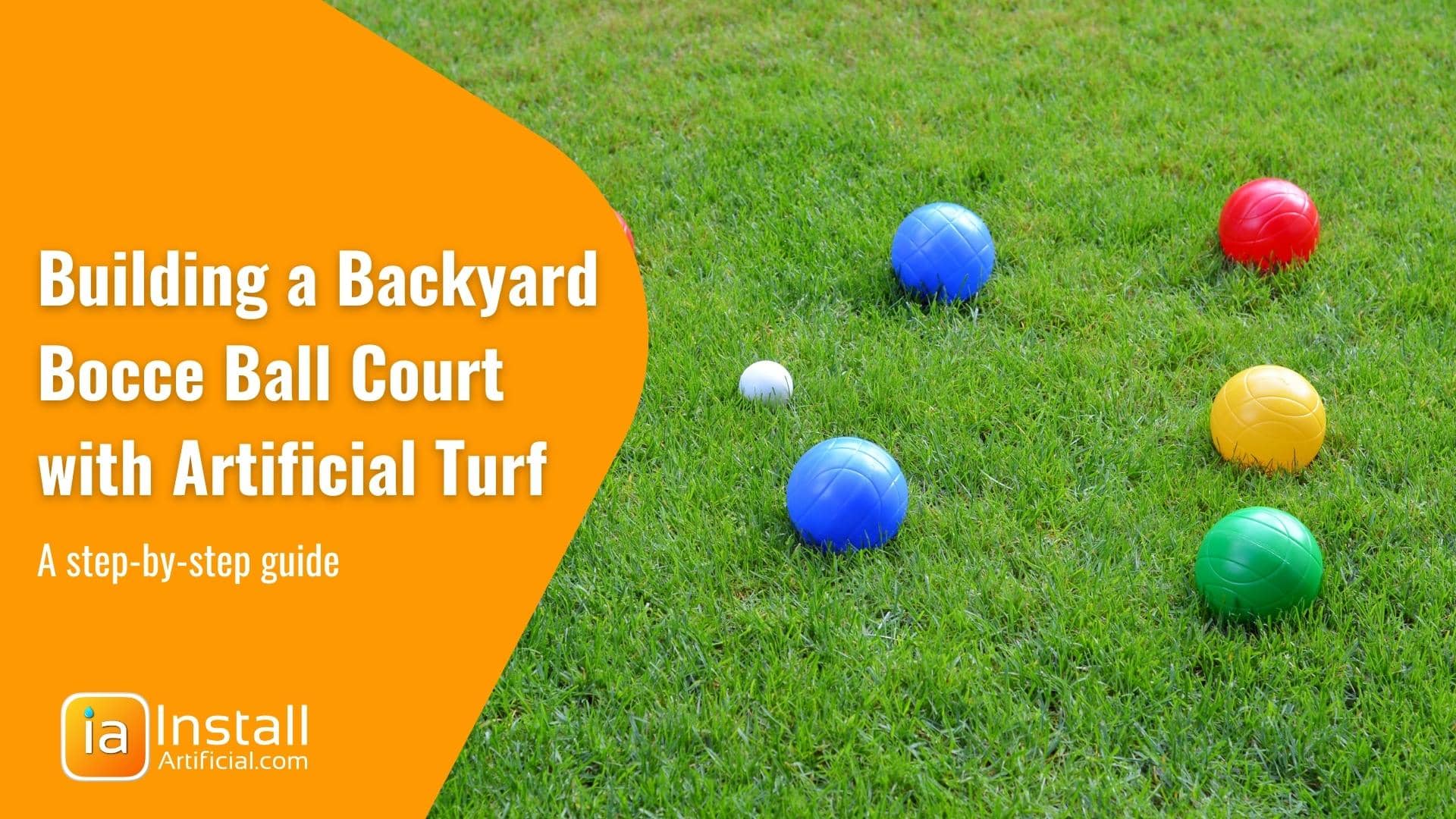
Assess the court's surface. If there is a noticeable slope, place the pallino lower on the incline to prevent it from rolling out of bounds. On a flat court, aim for the exact center.

Use a consistent throwing motion. Release the pallino with enough force to reach the target zone but not so much that it overshoots. Aim for a spot slightly closer to the throwing line than the far end.
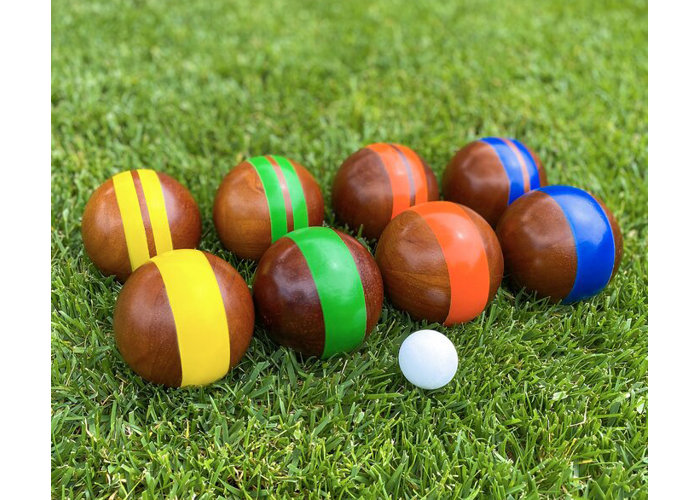
Check that the pallino is not near any boundaries. If it is too close to an edge, you may need to re-throw, depending on your local rules. A central placement ensures a fair and strategic start to the game.
Use the right shot for the distance
Bocce is a game of geometry, not just strength. The most common mistake beginners make is trying to solve every problem with power. You need to read the court like a map. If the pallino is far away, you need a drive. If it’s close, you need a placement shot. Mixing these up is the fastest way to lose a point.
The placement shot
Use this when your ball is near the pallino or when you need to block an opponent’s path. The goal is precision. You are not trying to knock anything away; you are trying to stay put.
Hold the ball lightly in your palm. Keep your elbow close to your body and your wrist stiff. This creates a pendulum motion that is easy to control.
Swing your arm forward smoothly. Release the ball just before your arm reaches the top of its arc. Let the ball roll gently onto the court.
Keep your hand pointed at the target until the ball leaves your fingers. This ensures the ball travels in a straight line without spinning off course.
The drive shot
Use this when your ball is far from the pallino or when you need to knock an opponent’s ball away. The goal is speed and accuracy. You are trying to hit a moving target with force.
The drive requires a more aggressive stance. Keep your elbow out and your wrist loose. Swing your arm back further and forward with more speed. The ball should leave your hand with enough momentum to travel the full length of the court. Aim for the center of the target ball to maximize the chance of a clean hit. If you miss, you might leave your ball in a bad position, so only use this shot when necessary.
Defend your position with angles
Direct hits aren’t always the best move. When the court is crowded or your opponent has a strong guard, using side walls to angle your bocce ball is a smarter way to protect your position or reposition closer to the pallino. This technique lets you bypass obstacles without risking a collision that sends your ball out of play.
Think of the side walls like a pool table. Instead of trying to pot the ball straight in, you use the rail to change direction. By striking the ball at a calculated angle against the side wall, you can redirect it into tight spaces that are otherwise unreachable. This is especially useful when you need to slip a ball past a defensive guard or land softly near the pallino without knocking it away.
To execute this effectively, aim for a shallow angle off the wall rather than a sharp bounce. A glancing blow transfers less energy, allowing your ball to roll gently into place. Practice this by setting up a ball a few feet from the wall and trying to land it within a meter of a target spot. The goal is precision, not power. With practice, these angled shots become a reliable part of your bocce ball strategies toolkit.
Watch common placement mistakes
Even experienced players falter when they ignore the subtle physics of the bocce court. The most frequent error is treating the ball like a baseball. Beginners often throw with too much force, causing the ball to overshoot the target or bounce unpredictably. A smooth, controlled release is far more effective than raw power.
Another common pitfall is poor body alignment. If your elbow flares out or your stance is uneven, the ball will drift left or right. Keep your elbow close to your body for a smoother release. This simple adjustment helps maintain a straight trajectory toward the pallino.
Lastly, many players fail to account for the court’s slope. Bocce courts are rarely perfectly flat. Ignoring the grade can cause your ball to roll off course just before it reaches its target. Always check the court’s incline before making your throw.
Check your scoring strategy
Scoring in bocce ball is simple but easy to misjudge. You only score when your ball is closer to the pallino than the opponent’s nearest ball. Each ball that meets this condition earns one point. The goal is to accumulate the most points, typically to a set total like 15.
This rule means every throw must be strategic. A ball that merely blocks an opponent scores nothing if it isn’t closer than their best ball. Focus on placing your balls in scoring positions rather than just clearing the court.
Before each throw, run through this quick checklist:
- Is this ball closer to the pallino than the opponent's nearest ball?
- Can I displace an opponent's ball to improve my position?
- Am I leaving a ball in a vulnerable spot?
Understanding these points helps you prioritize shots that actually count toward the win.
Watch a pro bocce demonstration
Seeing the mechanics in motion clarifies the subtle differences between a standard throw and a pro-level shot. Focus on the follow-through and the release point to understand how spin and trajectory are controlled.
The video below breaks down advanced shot selection and positioning strategies used by top players. Watching these techniques helps visualize the spatial awareness required to outmaneuver opponents.
No comments yet. Be the first to share your thoughts!