
First Roll: Bocce Basics
Bocce ball traces back to ancient Rome, though the version we play today took shape in 16th-century Italy. It is a game of precision and a bit of luck. You don't need to be an athlete to play, which is why it works for almost any backyard gathering.
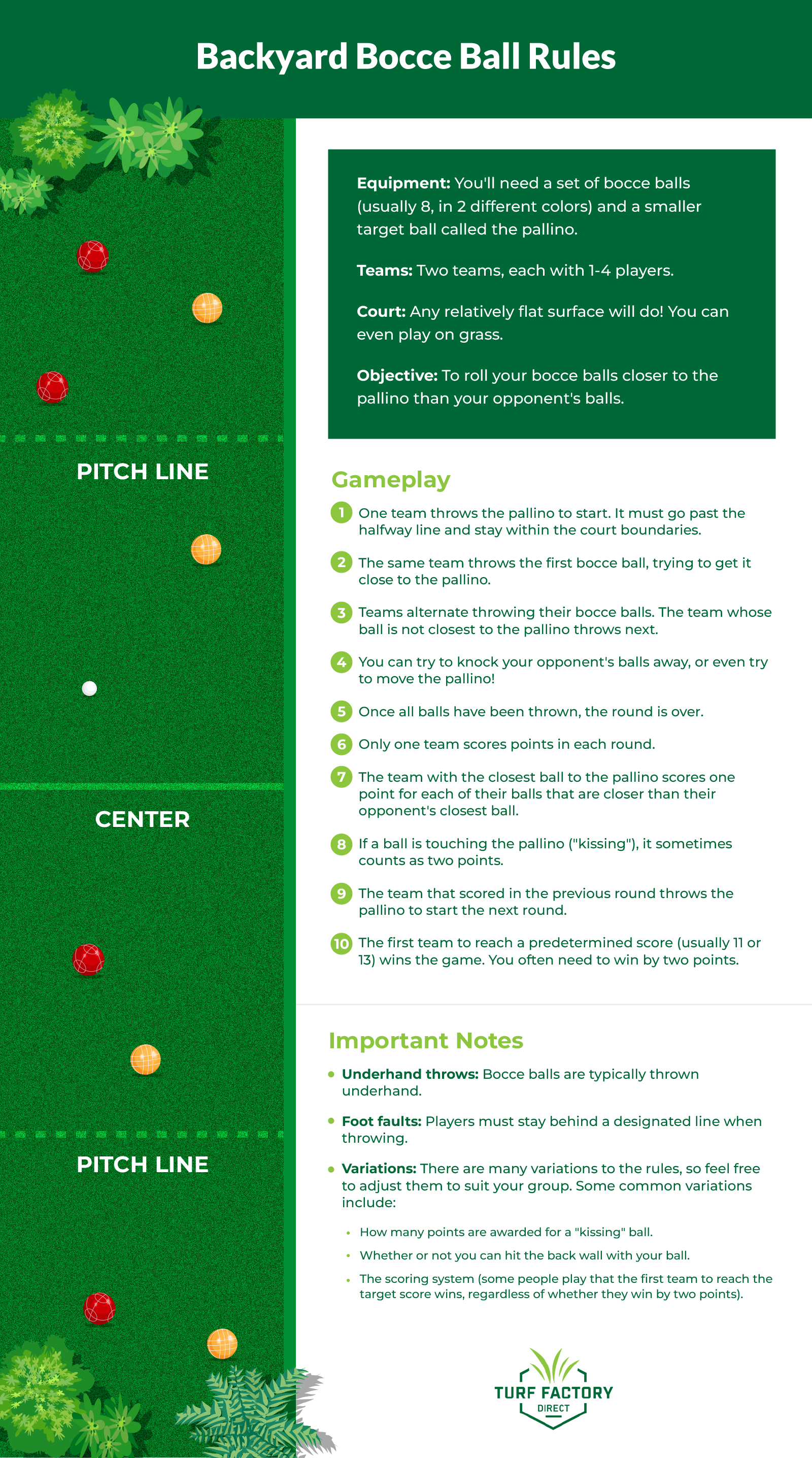
The equipment is fairly simple. A standard Bocce set, like the GoSports® Bocce Ball Game, includes eight bocce balls (two each in red, green, blue, and yellow) and one smaller pallino, or jack. The bocce balls are typically around 90mm in diameter, while the pallino is 50mm. Ball weight varies, but generally falls between 300-400 grams. I find slightly heavier balls offer more control, especially for beginners.
The court itself is rectangular, measuring 76 feet long and 10 feet wide, though you can certainly play on a smaller surface. The important thing is to have a relatively flat playing area. The goal is straightforward: get your bocce balls closer to the pallino than your opponent’s. It sounds easy, but mastering the nuances takes practice. Don't worry about getting everything perfect at first – just focus on having fun and learning the basics.
The first throw
Many beginners underestimate the importance of the pallino throw. It sets the stage for the entire game. A well-placed pallino can force your opponent into difficult shots, while a poor throw can give them an easy advantage. It’s not just about distance, but about strategic placement – think about creating angles and potential blocking opportunities.
Technique is key. I recommend a smooth, underhand release. Grip the pallino lightly, with your palm facing upwards. Your stance should be comfortable and balanced, with one foot slightly ahead of the other. Focus on a consistent swing and follow-through. Avoid jerky movements or trying to throw with too much power. Accuracy is far more important than distance here.
Common mistakes include throwing the pallino too hard, resulting in it going out of bounds, or not accounting for the court surface. A slight slope or uneven patch can significantly affect the pallino’s trajectory. Practice throwing at different distances and angles to get a feel for how the pallino behaves. Don’t be afraid to experiment and find what works best for you. Remember, consistency is the goal.
Throwing techniques
Once the pallino is set, the real strategy begins. You’ll need to master several different throwing techniques to be successful. The direct throw is your bread-and-butter, used for getting close to the pallino when you have a clear path. For more advanced players, the rafia is a spin throw that allows you to curve the ball around obstacles or knock opponents’ balls out of position.
The lob is another useful technique, especially when facing obstacles. It involves throwing the ball higher into the air, allowing it to descend softly near the pallino. Controlling the speed and spin of your throws is crucial. A slower throw allows for more accuracy, while a faster throw can be used to displace opponents’ balls. Experiment with different grips and release points to find the right balance.
Defensive throwing is often overlooked, but it’s just as important as offensive play. Blocking opponents’ balls is a key component of bocce strategy. You can place your balls in front of the pallino to protect it, or strategically knock opponents’ balls away from the target. Consider the angle of approach and the potential consequences of each throw. It's about disrupting your opponent’s plans, not just advancing your own.
Here's a step-by-step guide to the direct throw:
1. Grip: Hold the bocce ball comfortably in your hand, with your fingers spread evenly around the surface. 2. Stance: Stand with your non-throwing shoulder facing the pallino. 3. Swing: Swing your arm back smoothly and then forward, releasing the ball at shoulder height. 4. Follow-through: Continue your arm motion forward after releasing the ball for increased accuracy.
- Hold the ball with fingers spread evenly across the surface.
- Stance: Stand with your non-throwing shoulder facing the pallino.
- Swing: Swing your arm back smoothly and then forward, releasing the ball at shoulder height.
- Follow-through: Continue your arm motion forward after releasing the ball for increased accuracy.
How scoring works
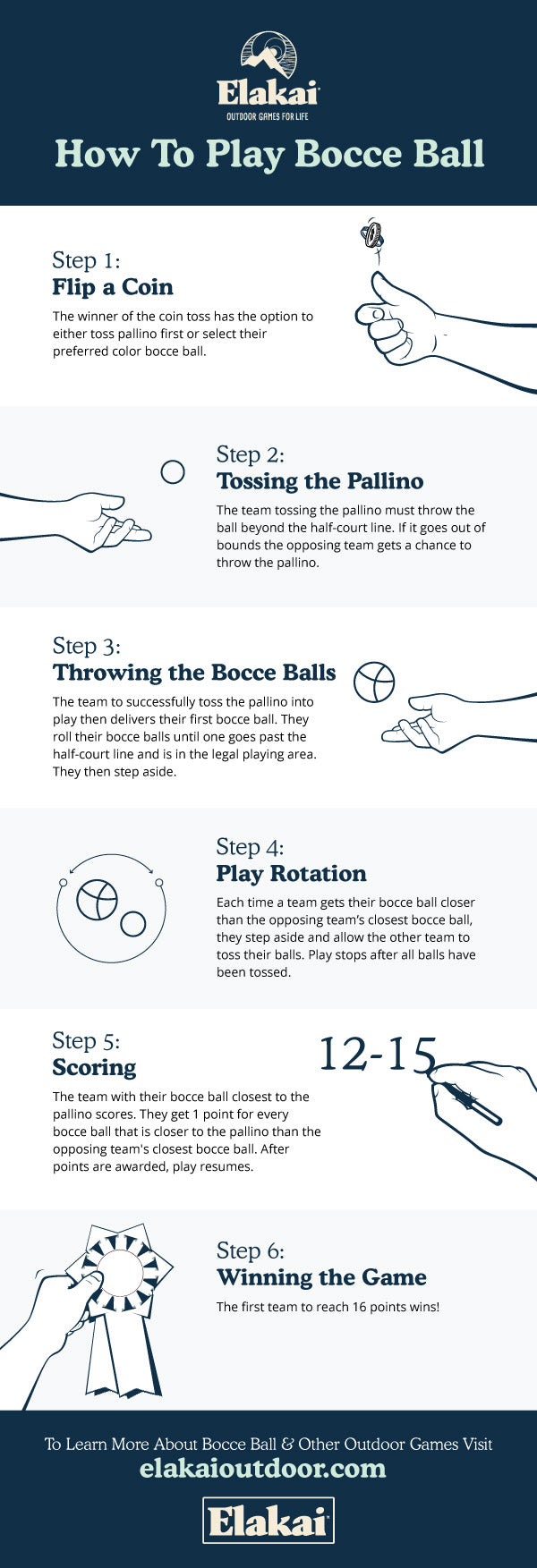
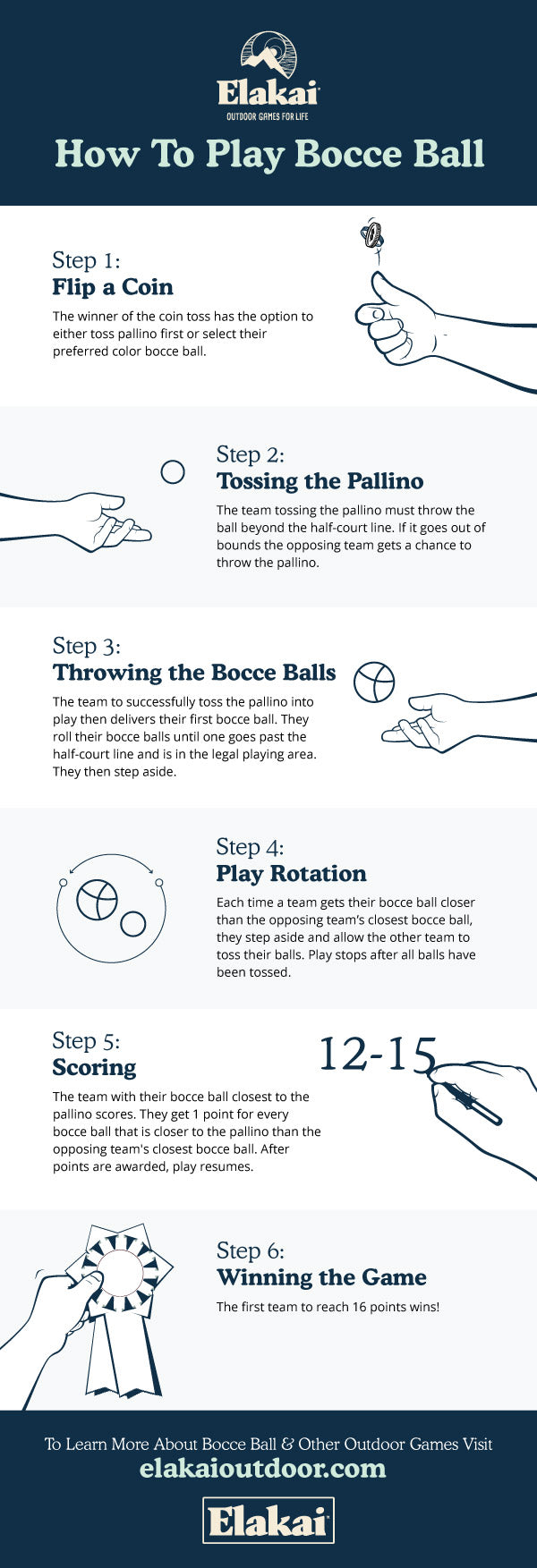
Scoring in bocce ball is based on proximity to the pallino. After all the balls have been thrown, the team with the ball closest to the pallino earns one point. Each subsequent ball closer than the opponent’s closest ball earns an additional point. Only one team can score in each frame.
Resolving disputes about which ball is closer can happen, so it’s good to have a clear understanding of the rules. Measuring tape is often used to settle disagreements. The concept of a "frame" refers to a complete round of throws, where each player from both teams has thrown their balls. A match typically consists of multiple frames.
The win condition is reaching 12 points, but you must win by at least two points. So, if the score is 11-10, play continues until one team reaches a two-point lead. Matches are usually played as best-of-three rounds, meaning the first team to win two rounds wins the match. Understanding these scoring rules is essential for making informed strategic decisions.
Bocce Ball Scoring Scenarios
| Team A Balls Closer to Pallino | Team B Balls Closer to Pallino | Points Awarded to Team A |
|---|---|---|
| 1 | 0 | 1 Point |
| 2 | 0 | 2 Points |
| 1 | 1 | 0 Points |
| 2 | 1 | 1 Point |
| 0 | 1 | 0 Points |
| 0 | 2 | 0 Points |
| 3 | 0 | 3 Points |
| 3 | 1 | 2 Points |
Illustrative comparison based on the article research brief. Verify current pricing, limits, and product details in the official docs before relying on it.
Strategic Blocking: Deny Your Opponent
Bocce isn't just about getting your own balls close to the pallino; it’s equally about preventing your opponent from doing the same. Strategic blocking is a crucial skill. A well-placed block can disrupt your opponent’s plans and force them into difficult shots.
Several blocking techniques are effective. Placing balls directly in front of the pallino is a common tactic, creating a barrier that’s hard to overcome. You can also strategically knock opponents’ balls out of position, removing them from contention. Consider the angle of your throw and the potential consequences of each block. Sometimes, sacrificing a ball to block a more dangerous opponent’s ball is a smart move.
Common blocking formations include creating a "wall’ of balls in front of the pallino, or strategically placing balls on either side to limit your opponent’s options. Learning to read your opponent"s intentions and anticipate their throws is key to effective blocking. It really does become a bit of a chess match out there.
Court Awareness: Reading the Terrain
The court itself is a significant factor in bocce ball strategy. Don’t underestimate the impact of the terrain. Even slight slopes or imperfections in the surface can affect the trajectory of your throws. Take the time to assess the court before you start playing.
Look for areas where the ground is uneven or sloped. These areas can cause your balls to curve or roll in unexpected directions. Use this to your advantage by aiming for these spots when you want to create a strategic block or curve your ball around an obstacle. Conversely, be aware of these areas when throwing towards the pallino, and adjust your aim accordingly.
I’ve seen games won and lost based solely on a player’s ability to read the court. It's not just about physical skill; it’s about observation and adapting to the conditions. Pay attention to how your balls roll, and use that information to refine your strategy. A little bit of court awareness can go a long way.
No comments yet. Be the first to share your thoughts!