
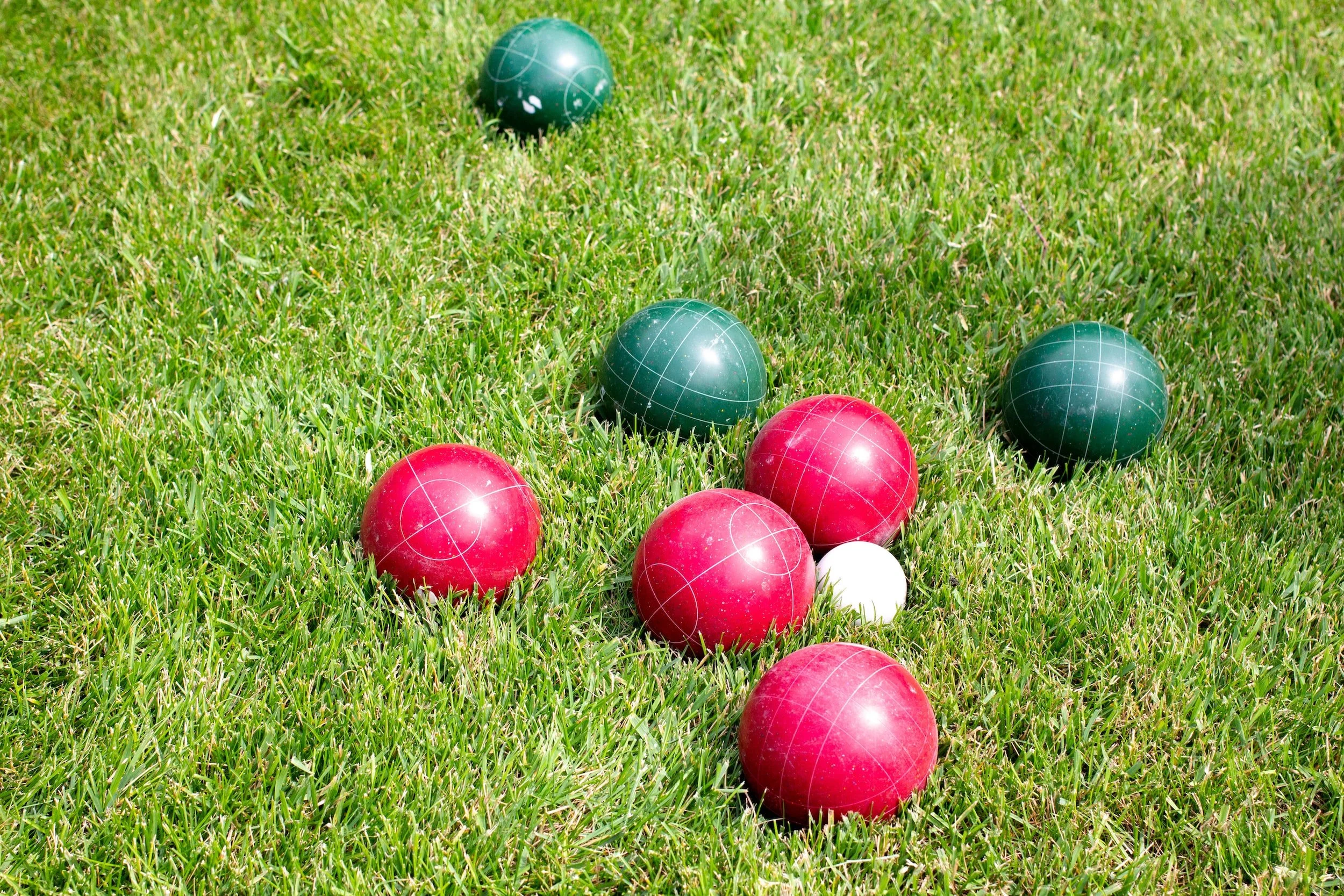

Start with the pallino placement
The first throw of every frame is the pallino, the small target ball that determines the scoring geometry for the rest of the round. Where it lands dictates whether you will be attacking or defending, and it sets the difficulty level for every subsequent shot.
Aim for the center, not the distance
The most effective pallino placement is not determined by how far down the court it travels, but by how centrally it sits relative to the sidelines. A pallino placed in the dead center of the playing surface gives your team the most options for the next throw. If you place it too close to a wall or sideline, you limit your angles and force your opponent to play a more difficult shot to reach it.
Think of the pallino as the center of gravity for the frame. If it is off-center, the entire frame tilts in that direction, often favoring the team that gets to throw second. By keeping the target ball in the middle, you maintain control over the pace and geometry of the game, preventing your opponent from easily establishing a defensive wall against the side lines.
Control the distance
While centrality is paramount, distance still plays a role. You want the pallino far enough down the court to make it difficult for your opponent to knock it away with a direct hit, but not so far that it becomes unreachable or leaves your team vulnerable to a long, precise strike. A good rule of thumb is to aim for the middle third of the court. This provides a balance between reachability and safety.
If the pallino lands too close to the front wall, it becomes an easy target for a simple strike. If it is too far back, it may roll out of bounds or land in an uneven patch of court. Consistency in your pallino placement allows you to predict the flow of the frame, making it easier to plan your team's shots for the remainder of the round.
Master the pointing technique
Pointing is the foundation of bocce ball strategy. The goal is simple: place your ball as close to the pallino as possible without disturbing it. While hitting an opponent’s ball has its place, consistent pointing wins most games because it forces your opponent to make difficult, high-risk shots later in the round.
Success here depends less on raw strength and more on rhythm and repetition. Many players rush their throws when trailing, which destroys accuracy. Instead, treat every pointing attempt as a controlled delivery. You need a grip and a release that feel identical every time, regardless of the score or the pressure.
1. Find your consistent grip
There is no single "correct" way to hold the ball, but there is a correct way for you. Some players prefer holding the ball with their wrist facing down, letting gravity assist the release. Others find more control with the wrist facing up, almost like a gentle underhand toss. Experiment with both. The goal is to find the position that allows your hand to open naturally at the right moment. Once you choose a grip, stick to it. Changing your hold mid-game introduces variables that hurt consistency.
2. Establish a rhythmic approach
Bocce is a game of tempo. Stand behind the throwing box and take a breath. Your approach should be slow and deliberate. A common mistake is to let adrenaline speed up your steps when you need a precise shot. Instead, slow down. Walk to your mark with a steady cadence. This rhythm calms your muscles and prepares your body for the smooth swing that follows. If you feel tense, take another breath. Tension is the enemy of precision.
3. Execute the smooth swing
Keep your arm relaxed. Think of your arm as a pendulum, not a lever. Swing it back gently, then let it swing forward through the release point. Do not muscle the ball. The weight of the bocce ball should do the work. Focus on a smooth, continuous motion from start to finish. Avoid any jerky movements or sudden stops at the end of the throw. A clean release ensures the ball rolls true and stops where you intend it to.
4. Follow through to the target
Your follow-through determines the ball’s final position. After releasing the ball, keep your arm extended toward your target for a split second. This ensures you didn’t decelerate early, which can cause the ball to fall short or veer off line. Watch the ball all the way to its stopping point. Analyze where it landed relative to the pallino. Did it stop short? Did it drift left? Use this visual feedback to adjust your next throw slightly.
5. Repeat and refine
Consistency comes from repetition. Practice this sequence until it feels automatic. Don’t just throw balls randomly; focus on executing the same mechanics over and over. Over time, your muscle memory will take over, allowing you to place balls accurately even under pressure. Remember, the player who points best controls the geometry of the court.

Choose a wrist position (up or down) that feels natural. Stick with one grip throughout the game to maintain consistency. Test both styles during practice to see which offers better control for your hand size.
Walk to the throwing line with a steady, slow tempo. Avoid rushing, especially when the game is close. A calm approach stabilizes your body and reduces muscle tension, leading to a more accurate release.
Swing your arm like a pendulum, letting the ball’s weight do the work. Release the ball smoothly without jerking or decelerating early. A clean release ensures the ball travels in a straight line toward the pallino.
Switch to bocce ball techniques for defense
Defense in bocce is not about playing it safe; it is about active disruption. When your opponent has a strong hold on the pallino, or when you are trailing in points, the bocce (hitting) shot becomes your primary tool to reclaim the court. This technique involves striking your ball with enough force to knock an opponent’s ball away from the target or to displace a ball that is blocking your path.
Think of the bocce shot as a tactical strike rather than a gentle placement. You are not trying to land softly; you are trying to change the geometry of the game. The goal is to remove the opponent’s advantage or clear a path for your own balls to score. Mastering this shot requires a shift in mindset from precision placement to controlled impact.
Step 1: Assess the Threat
Before you take your stance, identify the specific ball that is causing you the most trouble. Is it an opponent’s ball sitting directly next to the pallino? Or is it a ball blocking your lane? You need to know exactly which target to hit and where you want that ball to end up. A common mistake is hitting without a clear destination, which often results in your own ball rolling into a bad position or the opponent’s ball simply shifting slightly closer to the pallino.
Look at the court and pinpoint the opponent’s ball that is closest to the pallino or blocking your path. This is your primary target. Visualize the line of impact and where that ball will travel after being struck. If there are multiple threats, prioritize the one that is scoring or the one that is most difficult to dislodge later.
Unlike the placement shot, the bocce shot requires a wider, more athletic stance. Plant your feet firmly to absorb the recoil of the impact. Your body should be aligned with the line of impact, not necessarily the pallino. Keep your knees slightly bent and your weight balanced so you can drive through the ball with stability. This stance allows you to generate the necessary force without losing control.
Swing your arm with a firm, controlled motion. The key is to make solid contact with the center of your ball to transfer maximum energy. You want to hit the opponent’s ball squarely to send it in the desired direction. Avoid topping the ball or hitting it off-center, as this will result in a weak, unpredictable bounce. Follow through with your swing to ensure the ball travels with purpose.
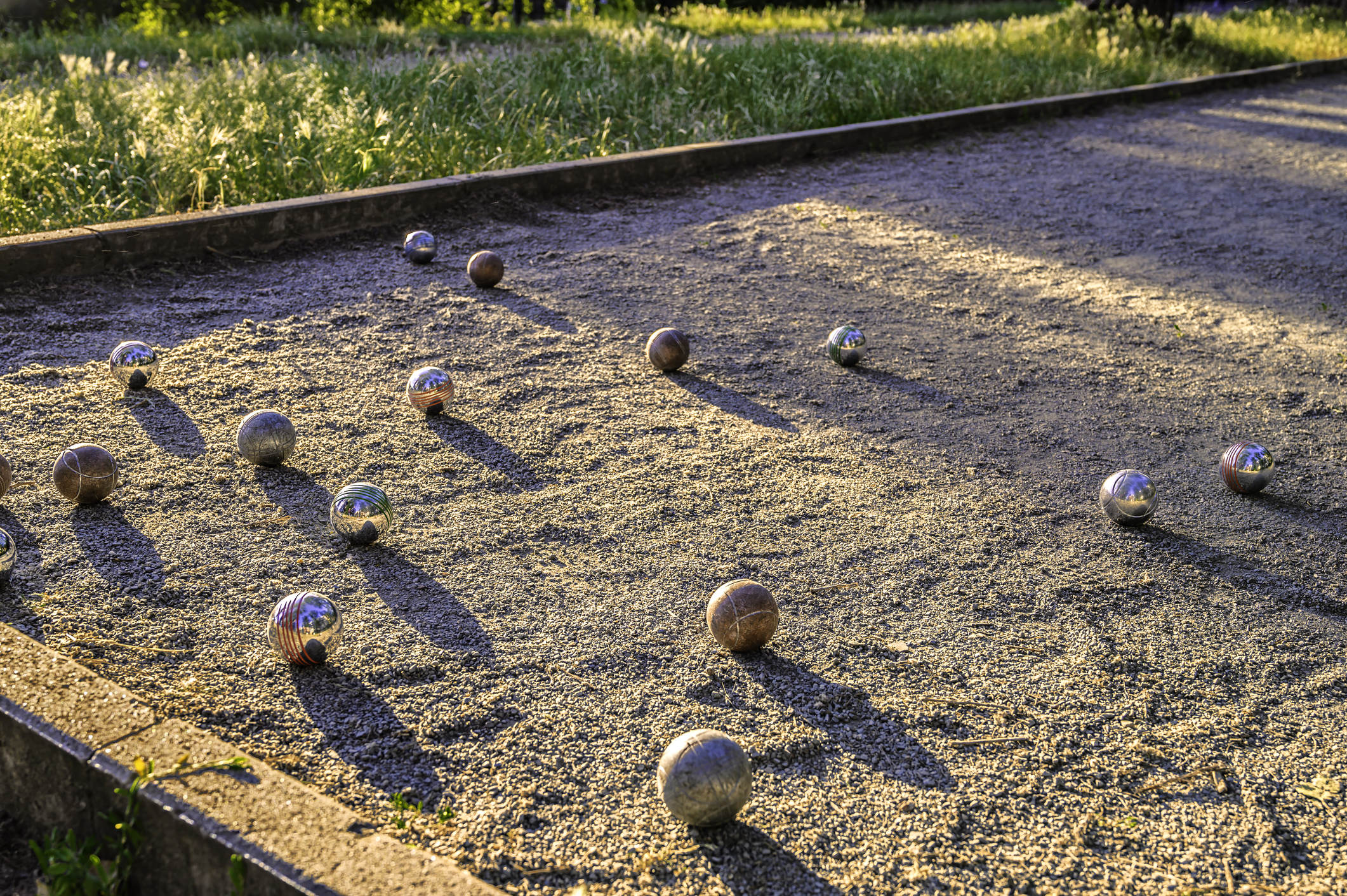
After the strike, immediately assess the new layout. The bocce shot often leaves your ball in a vulnerable position, so be ready to play your next ball strategically. If the opponent’s ball is knocked away but your ball is now far from the pallino, you may have traded a good position for a neutral one. Always consider the risk-reward ratio before committing to a hit.
Step 2: Control the Outcome
The most difficult aspect of the bocce shot is controlling the distance the opponent’s ball travels. If you hit too hard, you might send their ball out of bounds or even knock the pallino away, which can result in a loss of points or a reset. If you hit too soft, the ball might only move slightly, leaving it in a similar scoring position. The sweet spot is a forceful strike that moves the ball just enough to break its proximity to the pallino.
Practice the "touch hit" first. This is a bocce shot where you aim to move the opponent’s ball a few feet away from the target. This is often more effective than trying to knock it completely off the court. By moving the ball just out of range, you force the opponent to play a more difficult shot to recover. This subtle shift can disrupt their rhythm and force errors.
Step 3: Use the Wall or Bounce
Advanced players often use the court boundaries or other balls to their advantage. If you cannot hit the opponent’s ball directly, you might aim for a nearby ball or the wall to deflect your ball into the target. This requires a good understanding of angles and ball dynamics. It is a higher-risk strategy, but it can be highly effective when the direct path is blocked.
When using a bounce, aim for a clean, flat surface if possible. Avoid hitting the ball into the sand or rough areas, as this will absorb energy and make the bounce unpredictable. The goal is to use the bounce to change the direction of your ball while maintaining enough speed to displace the target. This technique adds a layer of complexity to your defense, making it harder for opponents to anticipate your moves.
Common Mistakes to Avoid
One of the most common errors is overcommitting to the hit. Players often swing too hard, losing control of their own ball’s trajectory. Remember, the bocce shot is a tool, not a panic button. Use it only when the potential gain outweighs the risk of leaving your own ball in a bad position. Another mistake is failing to follow through. A truncated swing results in a weak hit that may not move the opponent’s ball at all.
Finally, do not neglect your defensive positioning after the hit. A successful bocce shot is only half the battle; you must also ensure that your remaining balls are in good positions to score. If you knock away an opponent’s ball but leave your own ball far from the pallino, you have gained little advantage. Always play the whole court, not just the immediate target.
Watch for common bocce ball tips mistakes
Even experienced players fall into traps that sabotage their accuracy. The difference between a solid shot and a wasted turn often comes down to subtle habits you can correct mid-game. Focus on these frequent errors and the quick fixes to get back on track.
Rushing the throw
Pressure makes players speed up their delivery, especially when trailing. This rush disrupts your rhythm and throws off your aim. Stay relaxed and maintain a consistent pace regardless of the score. Take a breath, reset your stance, and let the ball roll with your natural tempo.
Poor grip and release
Holding the bocce ball too tightly creates tension in your arm and shoulder, leading to erratic releases. Grip the ball firmly but comfortably, letting it rest in your fingers rather than your palm. A loose grip allows for a smoother release and better control over the ball's direction and weight.
Ignoring the court surface
Bocce balls react differently to grass, clay, or synthetic surfaces. Playing on a uneven court without adjusting your aim is a common mistake. Take a moment to observe the lie of the land. If the court slopes, account for the drift by aiming slightly higher or lower than your target.
Standing too close to the line
Backing up too far or leaning forward can throw off your balance. Stand with your feet shoulder-width apart, keeping your body aligned with the target. This stable base helps you deliver the ball with consistent force and direction.
Practice these bocce ball strategies daily
Internalizing bocce ball strategies requires a structured routine that moves from basic placement to complex tactical shots. Consistent repetition builds the muscle memory needed for accuracy under pressure.

Focus on the quality of each throw rather than the quantity. A single well-placed ball often outperforms ten scattered ones. Review your form after each session to identify minor adjustments in your stance or release.
No comments yet. Be the first to share your thoughts!