
Set up the court and balls
Start by clearing a flat, level area of ground. Bocce is played on a smooth surface like packed dirt, gravel, or concrete. Avoid grass or uneven terrain, as bumps will cause the balls to roll off course. A rectangular space measuring approximately 12 feet by 60 feet is standard for competitive play, but a smaller 12-foot by 40-foot area works perfectly for backyard games.
Gather your equipment: eight large bocce balls (four per team) and one small target ball called the pallina. The pallina is the goal of the game; the objective is to throw your larger balls as close to this small target as possible.
To begin the match, place the pallina at one end of the court. Toss it gently so it lands between 10 and 30 feet away from the starting line. This distance is critical—too close, and it’s easy to knock away; too far, and it’s hard to reach. Once the pallina is in play, teams take turns throwing their four bocce balls, aiming to cluster around the target while knocking opponents’ balls away.
Find a flat, level area free of rocks, roots, or slopes. Packed dirt, gravel, or concrete surfaces work best. Avoid grass, which can cause unpredictable bounces and slow rolls. Mark the boundaries with chalk or tape if playing on a smooth surface.
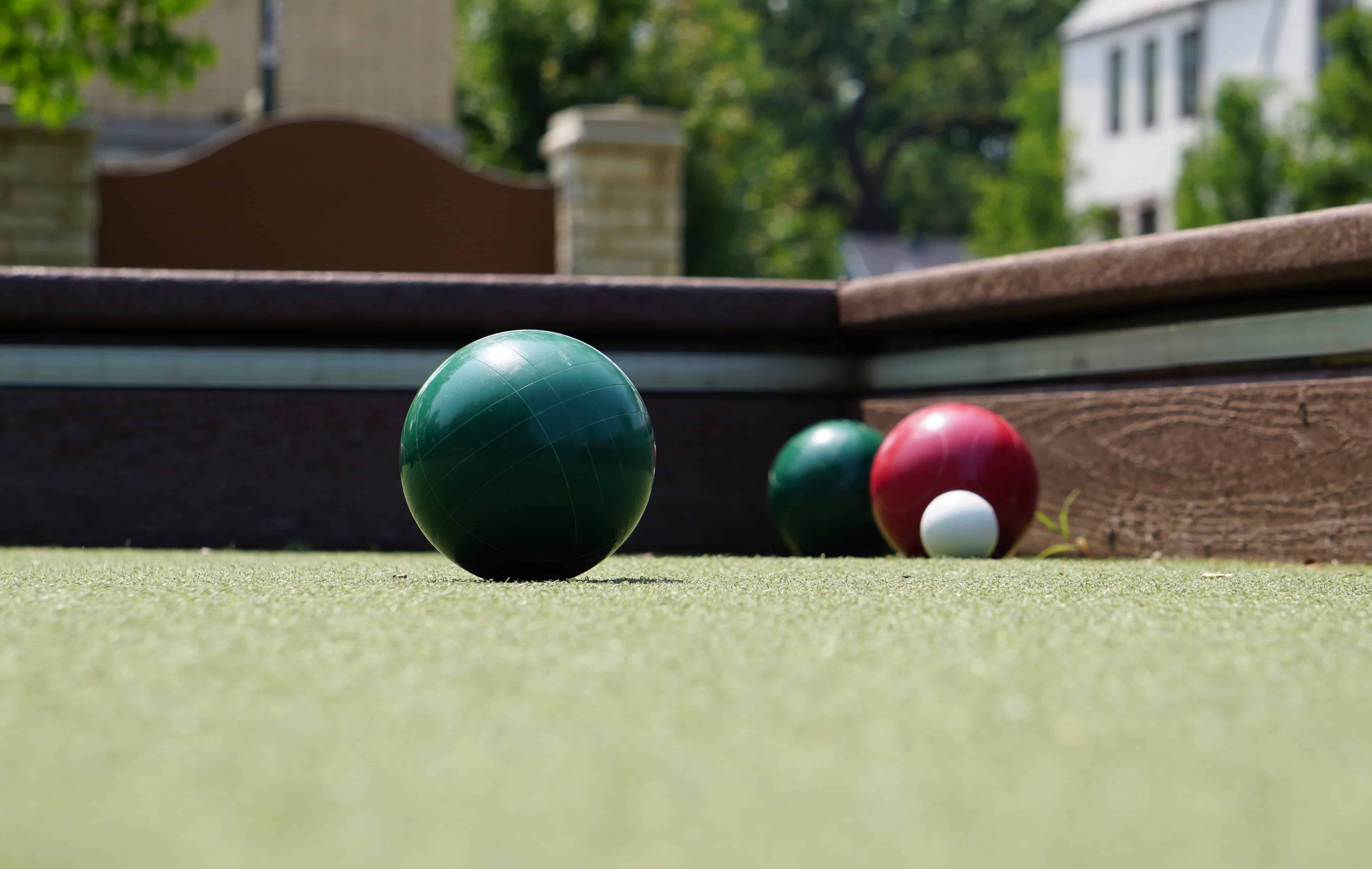
Stand at the starting line and toss the pallina (the small target ball) toward the opposite end. Aim for a landing spot between 10 and 30 feet away. The pallina should rest quietly without rolling into a hazard or out of bounds. This spot becomes the center of play.
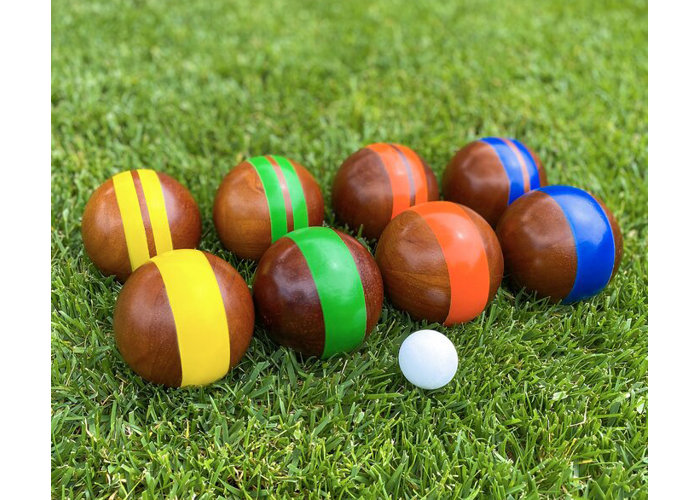
Each team takes four bocce balls, typically color-coded to distinguish sides (e.g., red vs. blue). Players stand behind the starting line and take turns throwing their balls underhand, aiming to place them as close to the pallina as possible. The team with the ball closest to the pallina scores points at the end of the round.
Throw the pallina and first ball
Every game of bocce begins with a target. The small, lightweight ball you toss onto the court is called the pallina. Think of it as the bullseye: your team’s goal is to get your larger bocce balls as close to this tiny marker as possible. In some rule sets, this small ball is referred to as the pallino.
To start the opening sequence, one player from each team flips a coin to determine who throws first. The winning team then tosses the pallina onto the playing surface. It should land at least 3 to 5 meters away from the starting line, ideally near the center of the court but not touching the side walls or rails. Once the pallina settles, it becomes the reference point for the entire frame.
After the pallina is in play, the same team throws their first bocce ball. This opening throw serves two purposes: it establishes your team’s position relative to the target and sets the tone for the frame. You can aim to place your ball close to the pallina, or you might choose to knock an opponent’s ball away if one is already on the court (though this usually happens in later throws).
The next player from the opposing team must then throw their ball, trying to get closer to the pallina than the first team’s ball. If they succeed, they gain the "point advantage" and get to throw all four of their balls before the first team throws again. This back-and-forth continues until all eight balls (four per team) have been thrown.
Score points after each round
Scoring in bocce is simple but strict: only the team with the ball closest to the pallina (the small target ball) earns points. This rule prevents the game from becoming a chaotic free-for-all and rewards precision over power. If your team has the nearest ball, you score one point for every ball you have that is closer to the pallina than your opponent’s closest ball.
Imagine your team has two balls sitting just inches from the pallina, while your opponents’ nearest ball is three feet away. You score two points. If your opponents have one ball closer than any of your balls, they score one point. The round ends immediately once a team reaches seven points, or after eight rounds if neither team hits that threshold.
To determine the winner of a round, teams often use a measuring tape or even their own feet to check proximity. The following table breaks down common scoring scenarios to help you visualize how points are tallied.
If the pallina is knocked out of bounds or lost, the round is voided, and the opposing team typically gets to throw the pallina again. This ensures that the game continues fairly, rewarding the team that didn’t accidentally disrupt the play.
Use strategic throws to gain advantage
Bocce is more than just tossing heavy metal spheres; it is a game of geometry and risk management. Once the pallina (the small target ball) is in play, your team must decide between two primary strategies: pointing or bombardment. Pointing involves placing your balls as close to the pallina as possible, while bombardment aims to knock opponent balls away to create a better scoring position.
Pointing for Precision
Pointing is the foundational strategy, especially for beginners. The goal is to establish a reference point that is difficult for opponents to beat. When pointing, focus on a smooth, underhand release. Aim to land your ball within two meters of the pallina. This distance is often close enough to deter opponents from attempting a risky bombardment shot, forcing them to also point, which plays into your defensive positioning.
Always throw your first ball to establish a reference point for your team. This sets the baseline for the rest of the round. If your first ball is too far away, your subsequent throws should aim to improve the position rather than risk knocking it out of bounds.
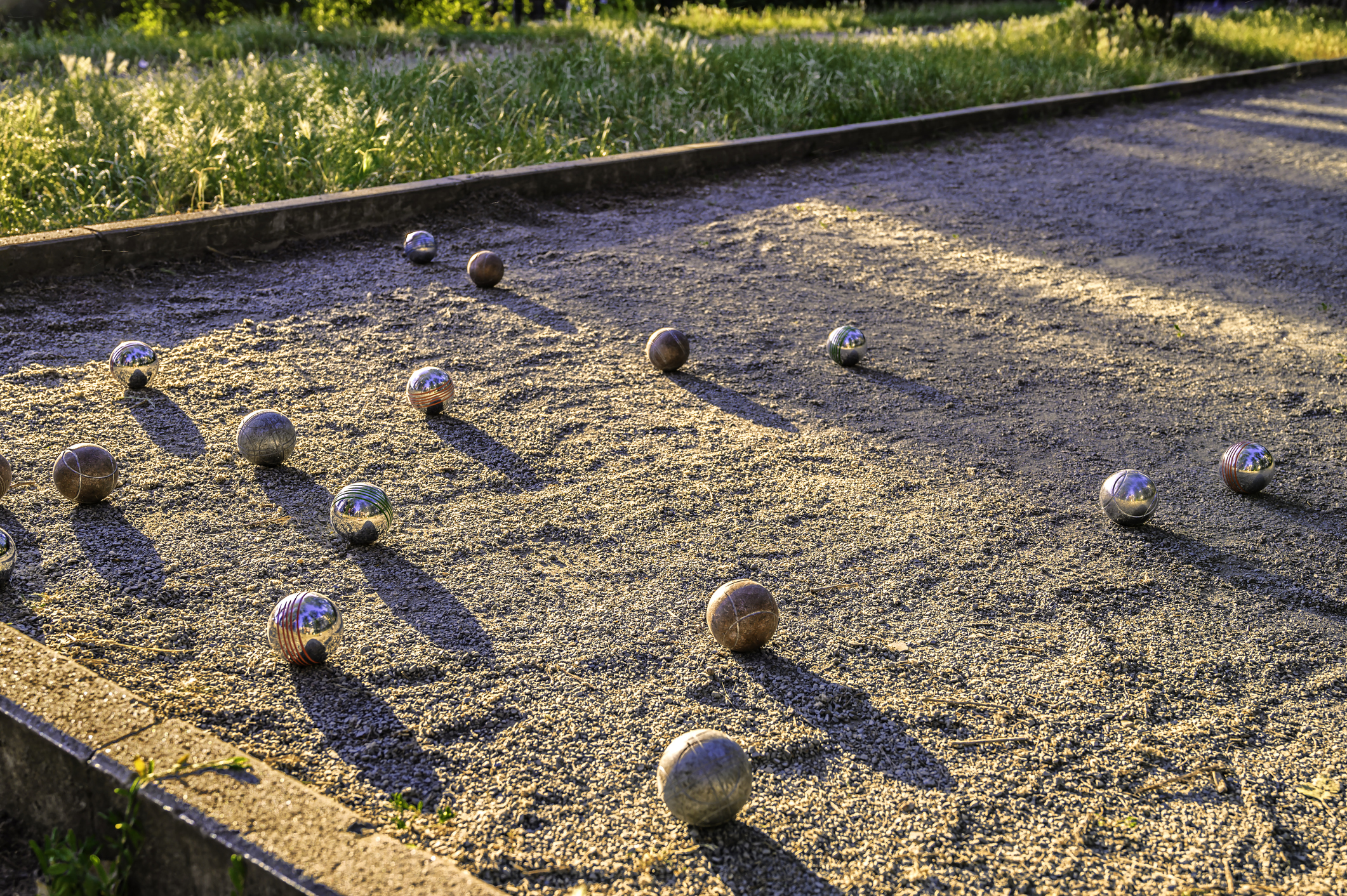
Bombardment Tactics
Bombardment, or bombardamento, is an aggressive tactic used when your team is trailing in points or when the opponent’s balls are clustered too tightly. The objective is to strike an opponent’s ball to move it away from the pallina or send it out of bounds. This is a high-risk, high-reward move. If executed poorly, you might accidentally knock your own ball away or send the pallina out of play, resulting in a penalty.
Use bombardment only when necessary. A well-placed strike can shift the entire momentum of a round, but it requires confidence in your aim. Practice your throwing arm’s strength to ensure you can deliver enough force to move the opponent’s ball without overshooting the target.
Reading the Court
The surface of the bocce court significantly impacts your strategy. On a smooth, hard surface, balls roll further and stop quickly. On dirt or grass, the balls may slow down or deviate slightly. Always adjust your throw based on the terrain. If the ground is uneven, a softer throw might be safer to avoid unpredictable bounces. Understanding the court conditions allows you to choose the right strategy and execute it with greater accuracy.
Choose the right bocce ball set
Selecting a bocce ball set depends on where you plan to play. Backyard games on grass or dirt require heavier balls to maintain momentum, while club-level play on crushed limestone or gravel often uses lighter, more precise balls. The weight and material of the balls determine how they roll and stop.
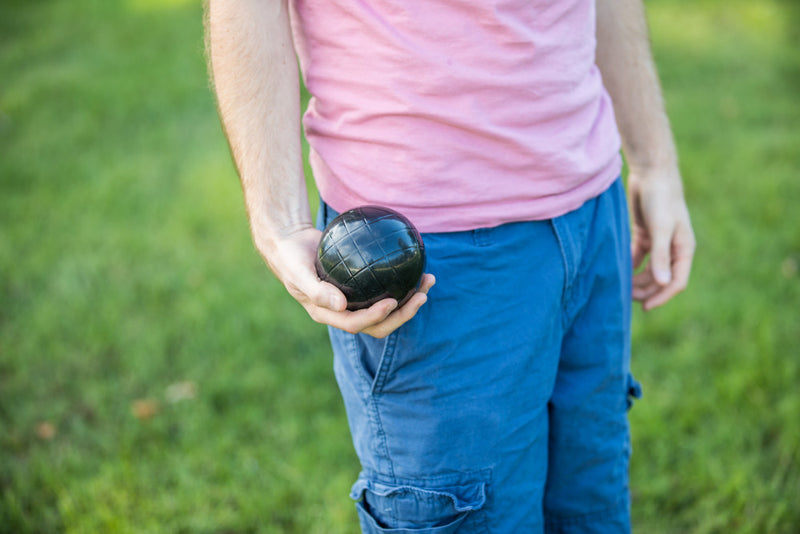
Bocce balls typically weigh between 30 and 35 ounces. Metal balls, usually made of steel or brass, are durable and roll smoothly on hard surfaces. Plastic or resin balls are lighter and better for soft grass or sand, as they don't sink as easily. Look for sets that include a carrying case and a measuring tape (or string) for scoring.
A standard set contains eight balls (four per team) and one smaller target ball called the pallina. Ensure your set includes a way to measure close calls, as this is essential for fair play. For most beginners, a mid-weight plastic or composite set offers the best balance of cost and performance for casual backyard games.
Watch a quick bocce ball tutorial
Sometimes seeing the throw helps more than reading about it. This short video breaks down the proper throwing motion and basic game flow, giving you a visual reference to match the written instructions.
Common bocce ball mistakes to avoid
The easiest mistake with Play Bocce Ball is comparing options on the most visible detail while ignoring the day-to-day constraint. A choice can look strong on paper and still fail because it is too hard to maintain, too expensive to repeat, or awkward in the actual setting. Use the same checklist for every option: fit, cost, durability, timing, upkeep, and fallback plan. That keeps the comparison practical instead of drifting into preference alone.
The simplest way to use this section is to keep the setup small, verify each change, and record the stable configuration before adding optional accessories.
Frequently asked questions about bocce
Is bocce Italian or French?
Bocce is the Italian version of the broader boules family of games, which includes the French game pétanque. While they share the same ancestor, bocce is distinct in its technique and court style. In bocce, players typically roll the balls underhand from a standing position, whereas pétanque requires throwing the ball with one hand while standing with feet together in a small circle.
What is the English name for bocce ball?
The sport is commonly referred to as bocce ball, bocci, or boccie in English-speaking countries. All these terms describe the same activity: throwing large balls to get as close as possible to a smaller target ball called the pallino (or pallina). The name "bocce" comes directly from the Italian word for "ball".
How do you win a game of bocce?
The primary goal is to score points by having your team's bocce balls closest to the pallino after all balls have been thrown. A team scores one point for each ball that is closer to the pallino than the opponent's nearest ball. The first team to reach a set score, usually 11 or 12 points, wins the match.
No comments yet. Be the first to share your thoughts!