
Bocce Basics: The Goal
Bocce ball is, at its heart, a game of precision and strategy. The objective is simple: get your bocce balls closer to the pallino – a smaller target ball – than your opponent does. It’s a game that looks easy to pick up, and it is, but mastering it takes practice and a good understanding of the nuances. You don't need to be an athlete to enjoy bocce; it’s a game for all ages and skill levels.
A standard bocce set, like the GoSports® Bocce Ball Game, includes eight larger bocce balls (usually two each of four colors) and one pallino. These are typically played on a relatively flat court, though a perfectly manicured surface isn't strictly necessary. The court dimensions can vary, but a common size is 76 feet long and 10 feet wide. For our purposes, understanding the scoring, we’ll assume a standard court setup.
Bocce is a social game, often played with a bit of friendly competition. But beneath the relaxed atmosphere lies a surprisingly strategic depth. It's a game where a little finesse can go a long way, and understanding the scoring rules is the first step to becoming a successful player. Don't be intimidated – we’ll break down everything you need to know.
Point Values: The Core System
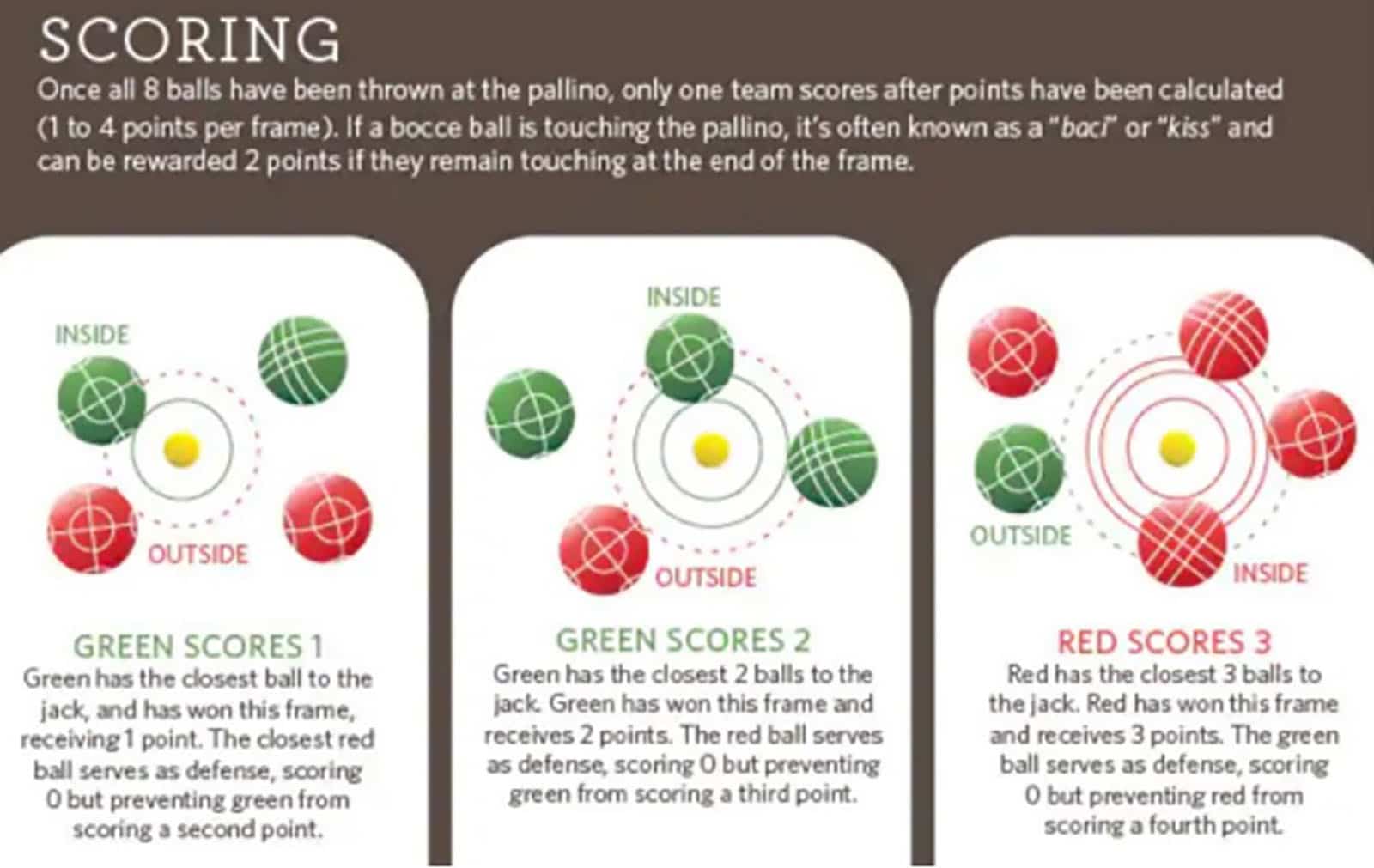
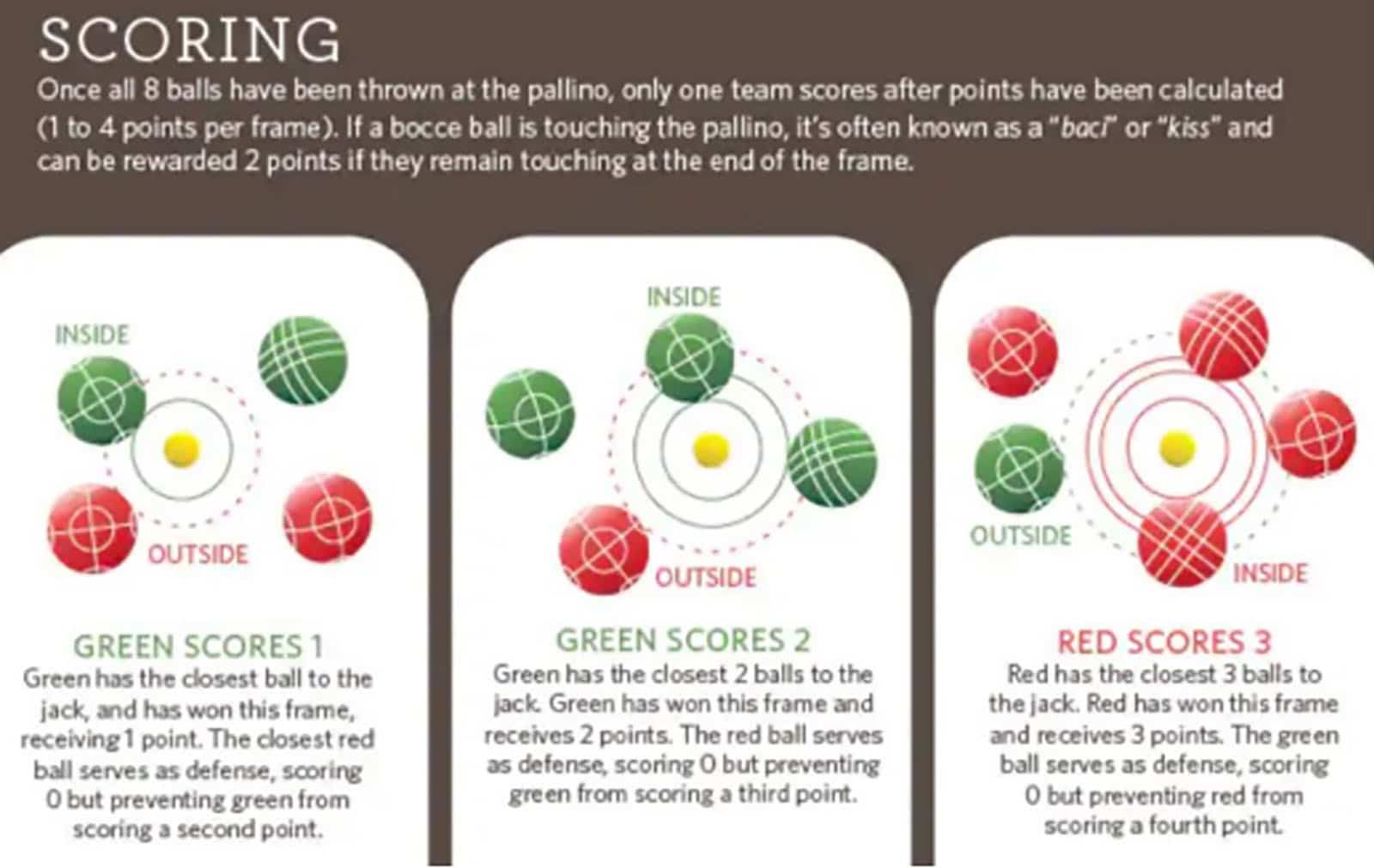
The scoring in bocce ball revolves around proximity. Only balls that are closer to the pallino than any of your opponent’s balls count for points. This is a critical point – it's not about how close you are to the pallino in isolation, but how you compare to your opponent. Each of your balls that meets this criterion is worth one point.
For example, let’s say you’ve thrown three balls, and all three are closer to the pallino than your opponent’s closest ball. You would receive three points in that frame. If your opponent then manages to get a ball closer, only balls closer than that ball will score in the next round of throws. It’s a constantly shifting situation.
The pallino itself is also worth a point! If the pallino is closest to one of your balls at the end of a frame, your team scores an additional point. This makes controlling the pallino’s position incredibly important. Remember, it’s comparative – the pallino only counts if it's closer to your balls than to your opponent’s. It's a simple system, but it demands careful play.
It's important to remember that scoring is only calculated at the end of each frame, after all balls have been thrown. It’s a complete assessment of where everything lies at that moment. Don’t start counting points mid-frame; it can lead to confusion and disagreements.
Measuring Closeness: What Counts?
Determining which ball is closest to the pallino isn’t always straightforward. While a visual judgment can sometimes suffice, a more precise method is usually employed. A tape measure is the most reliable tool, and a designated measurer is often appointed to avoid disputes. This person is responsible for objectively determining the closest balls.
Disagreements do happen, of course. In casual play, a friendly discussion and a re-measurement usually resolve things. In more competitive settings, the designated measurer’s decision is final. It's good sportsmanship to accept the measurement gracefully, even if it doesn’t go your way. The integrity of the game depends on fair play.
Court surfaces can also play a role. A slightly uneven surface or variations in the grass can affect how balls roll and settle. This is why consistent measurement is so important. The same ball might appear closer on one part of the court than another. Be mindful of these subtle differences when assessing distances.
If two balls are exactly the same distance from the pallino, the general rule is that no points are awarded for those balls. It’s considered a tie, and neither team benefits. This emphasizes the importance of trying to gain even a slight advantage in positioning.
Frame Scoring: Round by Round
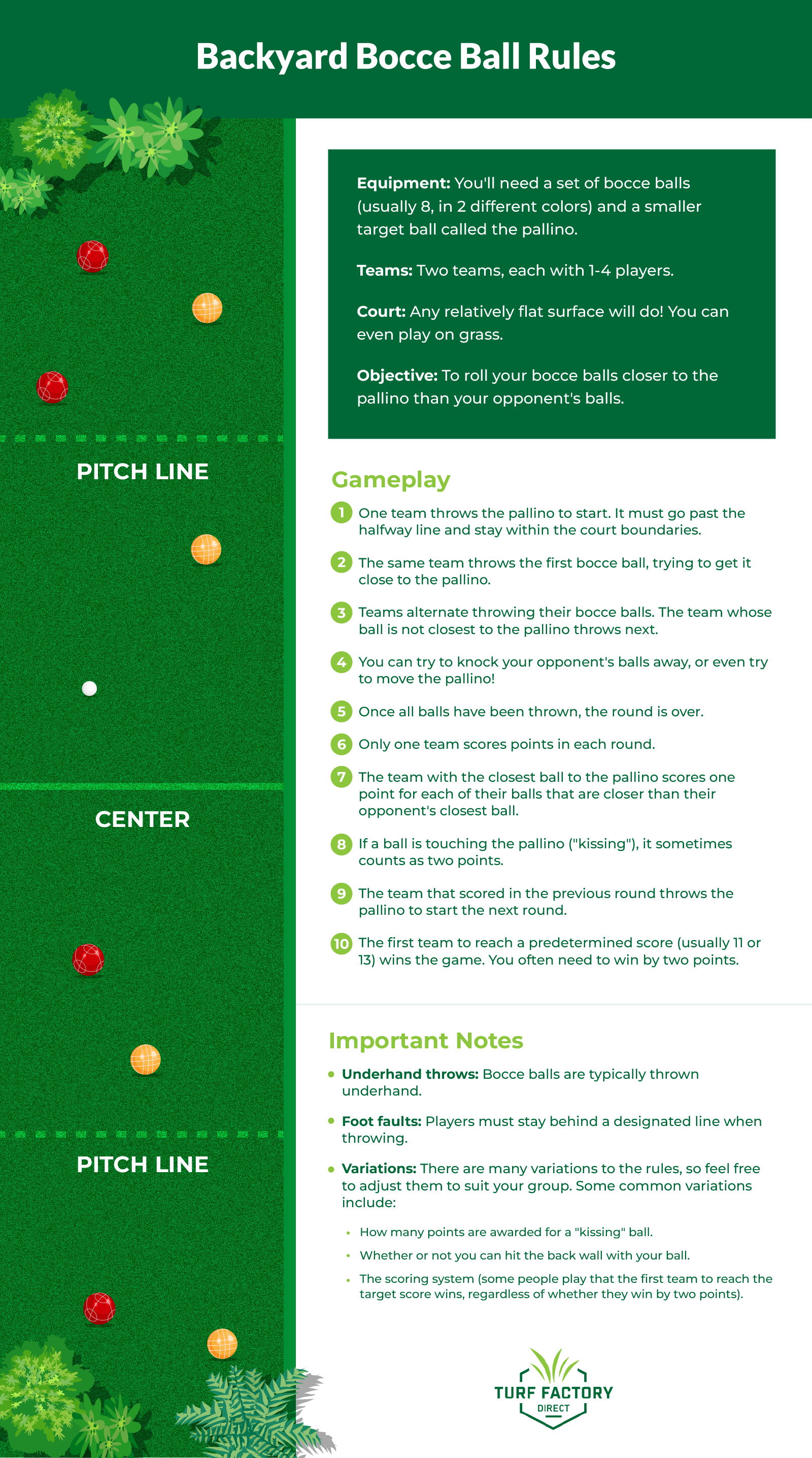
A 'frame' in bocce ball is essentially a single round of play. It begins with one team throwing the pallino, followed by their first bocce ball. Then, the opposing team throws a ball, attempting to get closer to the pallino or to knock their opponent’s ball away. This continues, alternating throws, until one team has used all eight of their balls.
Once one team has thrown all their balls, the other team completes their throws, trying to improve their position. Only then is the scoring calculated for that frame. Only one team can score points in each frame – the team with the balls closest to the pallino. The points are tallied, and the frame is complete.
It’s crucial to remember that the pallino doesn’t move once the frame has begun, unless it is accidentally nudged by a ball. If this happens, the frame is usually replayed. Maintaining the pallino's initial position is essential for fair scoring. But remember, a slight disturbance can happen, and a replay is a common solution.
After the scoring is recorded, the teams switch ends of the court, and a new frame begins. This process continues until one team reaches the winning score. The alternating throws and frame-by-frame scoring create a dynamic and engaging gameplay experience.
Winning the Game: Reaching 12
The ultimate goal in bocce ball is to be the first team to reach 12 points. However, there's a catch – you must win by two points. This means if the score is tied at 11-11, play continues until one team takes a two-point lead. This 'win by two' rule adds an extra layer of strategy and excitement to the game.
A typical match consists of three rounds, with each round consisting of multiple frames. This allows for strategic play across multiple games. Even if you lose a frame, you still have opportunities to recover and win the overall match. It's a test of consistency and adaptability.
Scoring rules can vary slightly depending on where you play. Some leagues or casual groups might have different rules regarding the pallino or the win-by-two requirement. Always clarify the specific rules before starting a game to avoid any misunderstandings. Knowing the local customs is part of the fun.
Strategic Scoring: Beyond the Basics
Beyond simply throwing your balls close to the pallino, skilled bocce players employ a variety of strategies. Blocking is a key tactic – using your balls to obstruct your opponent’s path to the pallino. Spocking involves intentionally hitting the pallino with your ball, potentially repositioning it to your advantage. Pointing is the art of rolling your ball accurately to land close to the pallino.
Reading the court is crucial. Pay attention to the surface, the slope, and the position of existing balls. Anticipate your opponent’s moves and plan your throws accordingly. A good player doesn't just react; they proactively shape the game's trajectory. Understanding how the balls roll on a particular surface is a skill that develops with experience.
Consistency is paramount. It’s better to consistently throw decent balls than to occasionally throw a brilliant shot followed by several poor ones. Focus on developing a repeatable throwing motion and controlling your power. Accuracy is more valuable than sheer force. A steady hand and a thoughtful approach will take you far.
Team communication is also vital. Discuss strategy with your partner, coordinate your throws, and provide feedback. Bocce is often a team effort, and effective communication can significantly improve your chances of success. Knowing your partner’s strengths and weaknesses can help you optimize your teamwork.
Common Scoring Errors
One of the most frequent mistakes is miscounting balls. In a crowded court, it can be easy to lose track of how many of your balls are closer than your opponent’s. Take your time, double-check, and don’t be afraid to ask for a second opinion. A clear visual scan of the court is essential.
Incorrectly measuring distance is another common error. Using the tape measure accurately and ensuring it’s aligned with the pallino is crucial. A slight mismeasurement can make a big difference in the scoring. Remember to measure from the closest point on the ball to the pallino.
Forgetting the 'win by two' rule is also a frequent oversight. Players sometimes celebrate reaching 12 points only to realize they still need to maintain a two-point lead. Keep track of the score and remember this important rule to avoid disappointment. It's a simple rule, but easily overlooked in the heat of the moment.
These errors often occur when players are rushing or are unfamiliar with the rules. Taking a moment to pause, review the scoring, and ensure accuracy can prevent frustration and ensure fair play. A little care goes a long way in maintaining a positive and enjoyable game.
Variations & House Rules
It's important to acknowledge that bocce ball scoring rules aren't universally standardized. Different regions, leagues, and even casual groups may have slight variations. Some might allow a 'dead ball’ – a ball thrown out of bounds – to be replayed, while others might not.
The win-by-two requirement is another area where house rules can differ. Some groups might play to 13 or 15 points, or they might eliminate the win-by-two rule altogether. It’s always best to clarify the specific rules before a game begins. Don't assume everyone plays by the same standards.
More competitive tournaments often have more complex scoring systems and detailed regulations. These might include rules about ball composition, court dimensions, and dispute resolution. Familiarizing yourself with the official rules of any tournament you enter is essential. Understanding the nuances can give you a competitive edge.
No comments yet. Be the first to share your thoughts!