

Equipment and court dimensions
To enjoy a game of bocce, you’ll need a few key pieces of equipment. First, the bocce balls themselves – typically eight, divided into two sets of four different colors. GoSports® offers a popular set with balls measuring 90mm, and includes a pallino, or jack, which is the smaller target ball measuring 50mm. A good set, like the one from GoSports, also includes a distance marker and a carrying case which is useful for transport and storage. Beyond the balls, a measuring tool is helpful for close calls, though not strictly required for casual play.
A standard court is 76 feet long and 10 feet wide. You'll see surfaces ranging from packed clay and grass to synthetic blends like 'Pacific Pearl' from Bocce Builders of America. While casual games happen on any flat patch of dirt, competitive play requires a defined boundary and foul lines at each end.
Portable bocce court options are readily available if you don’t have a dedicated space. These often come as rolled vinyl or canvas, and can be set up on almost any flat surface. While these may not offer the exact playing characteristics of a traditional court, they’re a great way to introduce the game to new players. Court construction can be a significant investment, so starting with a portable option is a sensible approach for many.
Don’t get too caught up in having the "perfect" court, especially when starting out. The spirit of bocce is about friendly competition and enjoying time outdoors. Focus on understanding the basic dimensions and ensuring a relatively flat, consistent surface. Many local parks now feature bocce courts, offering a convenient place to play without the need for any setup.
Official Rules: Gameplay Sequence
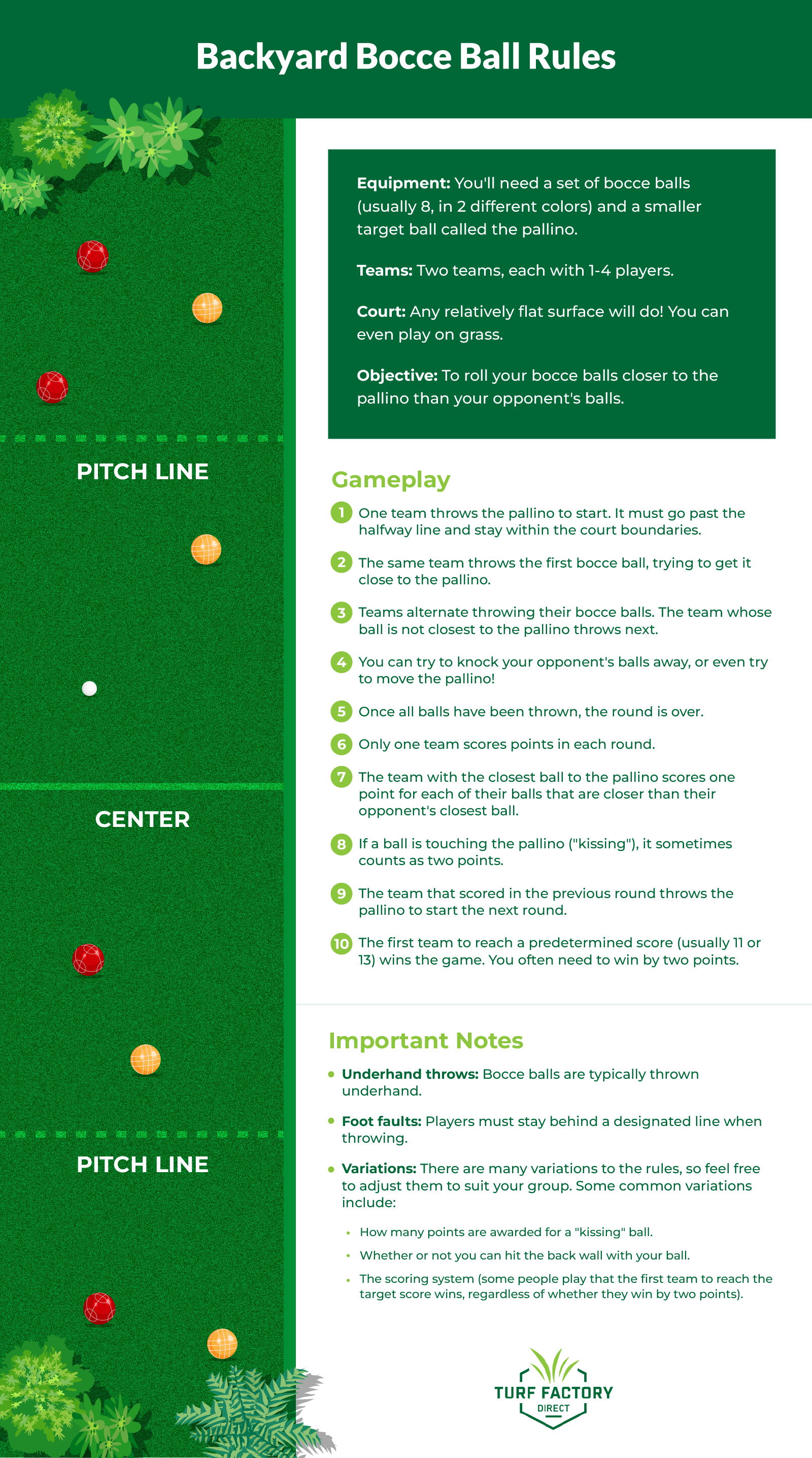
The gameplay sequence in bocce begins with a coin toss to determine which team throws first. The winning team then throws the pallino, aiming to place it within the designated area of the court – usually between the mid-court line and the far foul line. This initial throw sets the target for the rest of the round. A legal pallino throw means the ball lands within the boundaries and isn’t a foul.
Once the pallino is in play, the team that threw it throws their first bocce ball, attempting to get it as close to the pallino as possible. The opposing team then throws their balls until they either match the number of balls thrown by the first team or get a ball closer to the pallino. This continues, alternating throws, until all eight bocce balls have been thrown. It’s a back-and-forth, strategic process.
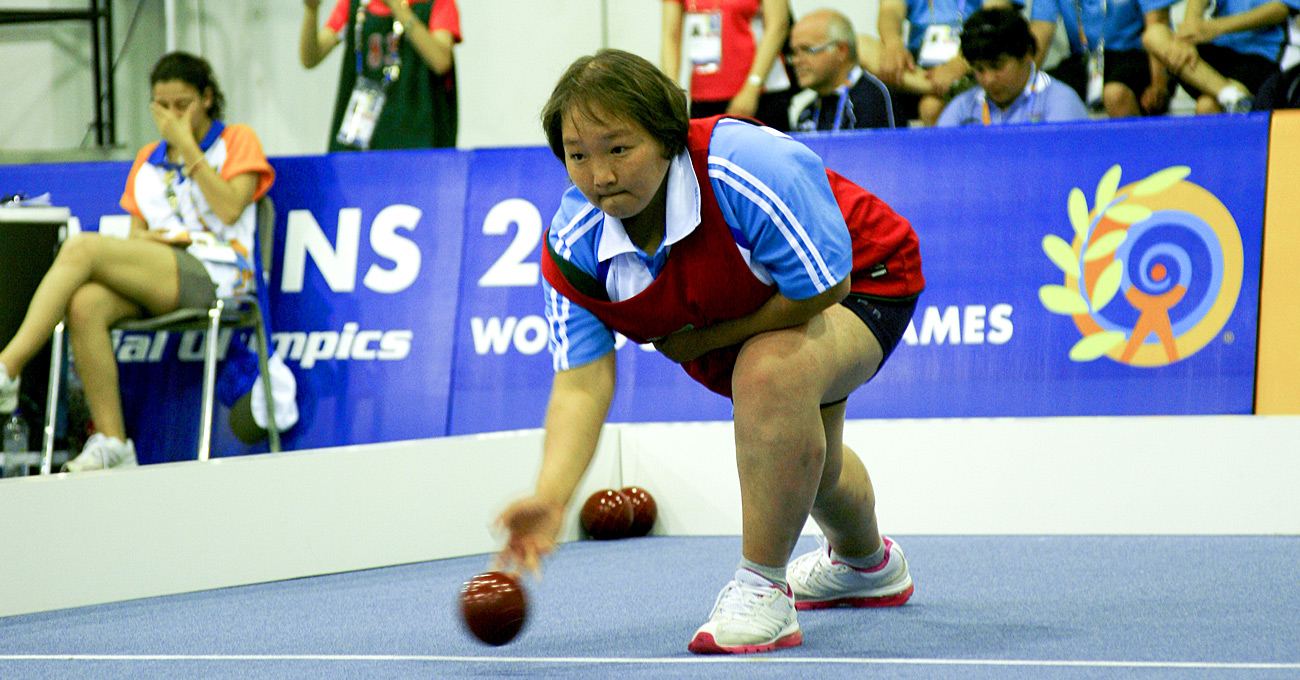
A legal throw requires the player to remain within the designated throwing box and release the ball without stepping over the foul line. Foot faults are common, especially for beginners, and can result in the throw being disallowed. The ball must also remain within the court boundaries. If a ball goes out of bounds, it’s considered a dead ball and removed from play. The 'box' is crucial; it defines where a legal throw originates and helps maintain fair play.
The rules regarding boundaries can be surprisingly nuanced. A ball that touches the boundary line is considered in play. However, if a ball rolls completely outside the boundary lines after initially landing in play, it is a dead ball. Disputes over these calls are common, which is why clear markings and, ideally, a neutral observer are helpful. The official rules, as defined by bocce.org, are the final authority, and updates for the 2026 season should be carefully reviewed when they’re released.
Scoring: Points and Measurement
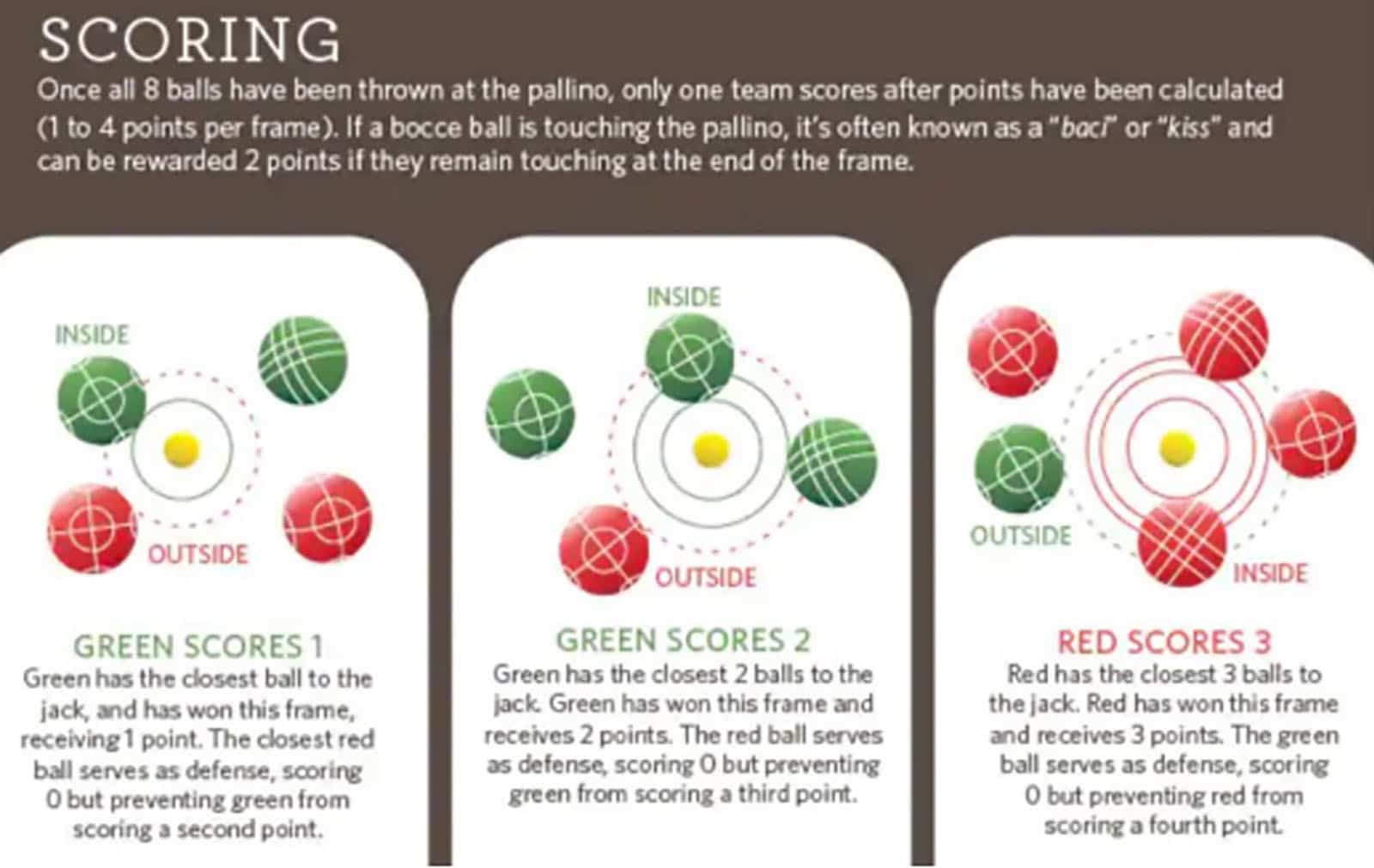
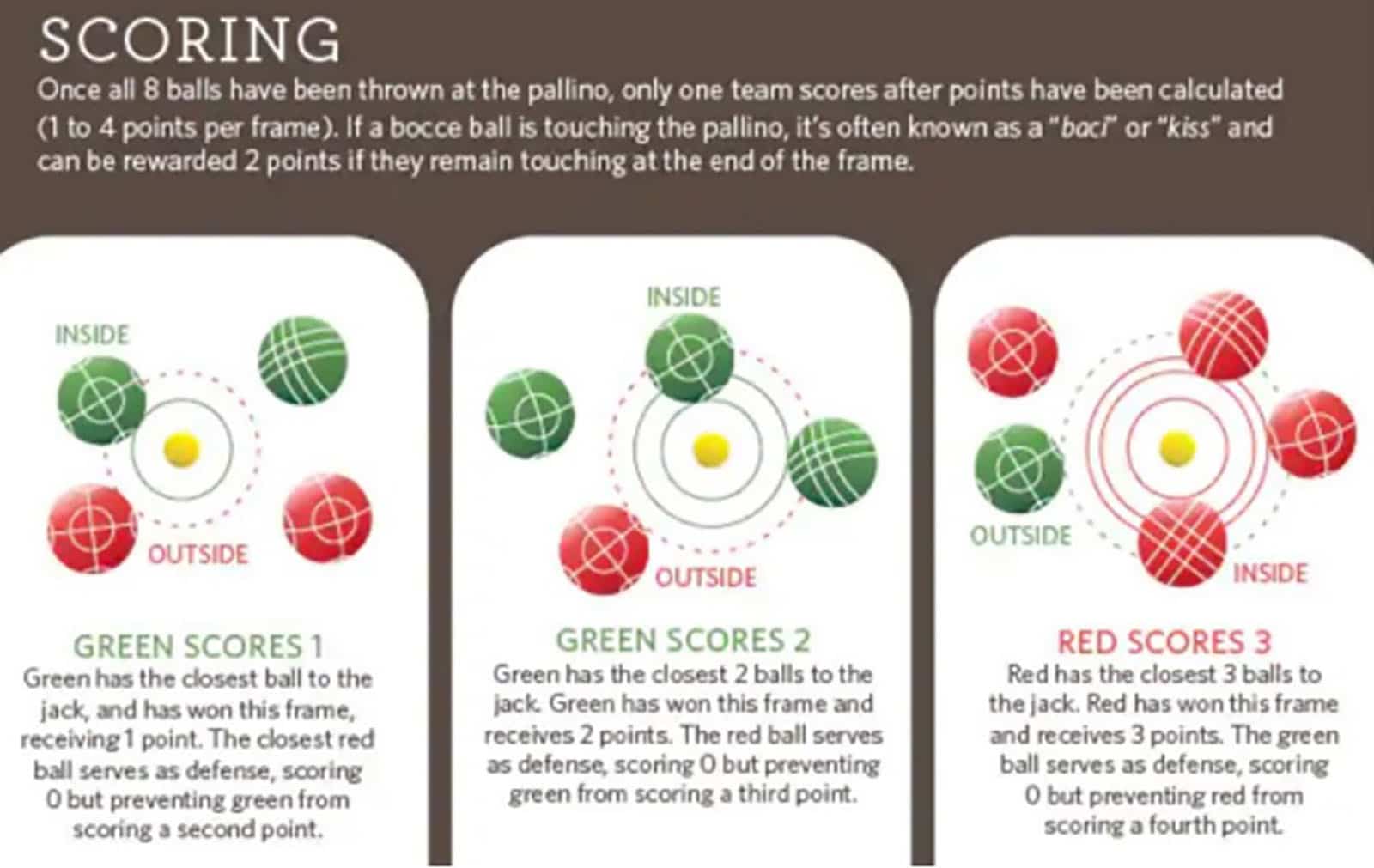
Scoring in bocce is straightforward: one point is awarded for each bocce ball that is closer to the pallino than any of the opposing team’s balls. Only one team scores per round, meaning the team with the closest ball(s) gets all the points for that round. The first team to reach 12 points wins the game, but they must win by at least two points. A match usually consists of multiple rounds, often three, to determine the overall winner.
Determining which ball is closest can sometimes be tricky, especially when balls are clustered tightly around the pallino. This is where a measuring tool – calipers are often preferred – comes in handy. Accurate measurement is essential for fair play. The measurement is taken from the nearest point on the ball to the nearest point on the pallino. It's important to agree on a consistent method of measurement before the game begins.
If a ball touches the pallino, it is 'in' and beats any ball that isn't touching. If both teams have a ball touching, you look at the next closest set. Use calipers for these calls; eyeballing a tie usually ends in an argument.
The official rules detail acceptable measuring tools and methods. While a simple tape measure can work in a pinch, calipers offer greater accuracy. It’s also important to agree on a consistent point of reference for measurement – for example, the center of the ball versus the nearest edge. Consistency is key to ensuring a fair and accurate scoring process.
- Identify the closest ball from each team.
- Step 2: If the balls are clearly different distances away, award the point(s).
- Step 3: If the distances are close, use a measuring tool to determine the nearest ball.
- Step 4: Repeat for each ball, awarding one point for each ball closer to the pallino.
Common fouls
Several actions can constitute a foul in bocce ball. The most common is stepping over the foul line while throwing. This is a clear violation and results in the throw being disallowed. Another foul is throwing the ball before the previous player has completely released their ball. Maintaining proper throwing etiquette is essential for fair play.
Illegal throws also include throwing the ball in a manner that intentionally interferes with another player’s throw or throwing the ball with excessive force that could endanger other players. While bocce isn't a physically demanding game, safety should always be a priority. Intentionally disrupting an opponent's concentration or throwing technique is also considered a foul.
Disputes over fouls and violations are inevitable. In casual play, players typically resolve these disputes amongst themselves. However, in tournament play, a referee or designated official has the final say. The referee’s decision is binding, even if players disagree with it. Respecting the referee is a core principle of competitive bocce.
Penalties for fouls vary depending on the severity of the infraction. Minor fouls may result in the throw being disallowed. More serious fouls, such as intentional interference, could result in the loss of a point or even disqualification. Understanding the potential consequences of fouls helps players maintain a respectful and competitive environment.
Tournament Formats Explained
Bocce ball tournaments come in a variety of formats, each with its own unique rules and challenges. Round robin tournaments involve each team playing every other team in the tournament. This format ensures that all teams get a chance to compete against each other, but it can be time-consuming. Single elimination tournaments are faster-paced, with teams being eliminated after a single loss.
Double elimination tournaments offer a second chance to teams that lose their first match. A team must lose twice to be eliminated, providing a more forgiving format. Team play involves multiple players per team, adding a strategic element of collaboration and coordination. The specific rules for team play vary depending on the tournament organizers.
Handicap systems are often used in tournaments to level the playing field, allowing players of different skill levels to compete fairly. These systems typically assign a handicap to each player based on their skill level, adjusting their score accordingly. This creates a more competitive and enjoyable experience for all participants.
The choice of tournament format depends on the number of participants, the available time, and the desired level of competition. Round robin tournaments are best suited for smaller groups, while single or double elimination tournaments are more practical for larger events. Understanding the nuances of each format is crucial for successful tournament participation.
- Round Robin: Every team plays every other team.
- Single elimination: one loss and the team is out.
- Double Elimination: Two losses required for elimination.
- Team Play: Multiple players per team.
Bocce Ball Tournament Format Comparison
| Format Name | Typical Number of Players | Tournament Length | Complexity | Best For |
|---|---|---|---|---|
| Round Robin | 6-20+ | Longer – multiple rounds for each team | Moderate | Ensuring all teams play each other, good for social play and initial skill assessment |
| Single Elimination | 4-Unlimited | Shorter – one loss eliminates a team | Simple | Quick tournaments, decisive results, suitable for larger groups with limited time |
| Double Elimination | 4-Unlimited | Moderate to Long – requires two losses for elimination | Complex | More fair than single elimination, allows for a comeback, preferred for competitive events |
| Modified Round Robin (Pool Play) | 8-32+ | Moderate | Moderate | Balances play opportunities with tournament length, often used in larger events with preliminary rounds |
| Team Round Robin | 4-12 (teams of 2-4) | Moderate to Long | Moderate | Ideal for team-based competition and fostering camaraderie |
| Progressive Elimination | 8-64 | Moderate | Moderate to Complex | Teams are eliminated after each round, but losers may have a chance to re-enter depending on bracket structure. |
Illustrative comparison based on the article research brief. Verify current pricing, limits, and product details in the official docs before relying on it.
Advanced Strategies: Spin and Placement
Beyond simply throwing the ball close to the pallino, advanced bocce players employ a range of strategies to gain an advantage. One key technique is imparting spin to the ball. A spin can cause the ball to curve in flight or roll in a different direction upon landing, making it more difficult for opponents to predict its trajectory. Mastering spin takes practice and a good understanding of ball dynamics.
Strategic placement is equally important. Players often aim to block their opponent’s shots or to position their balls in a way that makes it difficult for opponents to get closer to the pallino. This requires careful consideration of the court layout and the opponent’s likely moves. Anticipation is a valuable skill in bocce.
Using the court to your advantage is another crucial strategy. Understanding how the surface affects ball roll and bounce can help players make more accurate shots. For example, on a slightly uneven surface, players might aim to use the slope to their advantage, guiding the ball towards the pallino. Expert players analyze the court conditions before each throw.
Experienced players often pause to visualize the path before they release. They aren't just looking at the jack; they're tracking the break of the court. I've found that taking five seconds to map the roll in my head helps more than any fancy grip.
Rule Variations: Regional and Casual Play
While the official rules of bocce provide a standard framework, variations are common in casual play and different regions. In some backyard games, players might allow a "roll-back" – a shot that intentionally knocks the pallino to a more favorable position. This is not permitted in official tournament play, but it adds a fun element to casual games.
Beach bocce, played on sand, often features slightly modified rules to accommodate the uneven surface. Players might be allowed a wider throwing box or a more lenient approach to foot faults. The emphasis is on having fun and adapting to the environment. The spirit of the game takes precedence over strict adherence to the rules.
Regional variations also exist. In some areas, players might use different scoring systems or allow for a limited number of "take-backs’ – the opportunity to re-throw a ball that didn"t land as intended. These variations reflect the local traditions and preferences of the players.
It’s important to clarify the rules before starting a casual game to avoid any misunderstandings or disagreements. The goal is to enjoy the game, and that often means being flexible and accommodating. Don’t be afraid to adjust the rules to suit the preferences of the players involved.
What is the most common rule variation you encounter when playing casual bocce ball?
Official tournament regulations can differ quite a bit from how most of us play bocce in our backyards and local parks. We want to know which rules tend to get adjusted the most in your casual games. Vote below and let us know how your group plays!
No comments yet. Be the first to share your thoughts!