
The 2026 Championship Shift
The 2026 bocce ball season showed a clear shift in high-level play. Previously, a steady hand and luck were sufficient, but recent championships highlight increased athleticism and a more analytical approach. Players now study trajectories, master spin, and use strategic court positioning.
Several key tournaments showed a move away from purely reactive play. Teams began proactively shaping the court to their advantage, forcing opponents into uncomfortable shots. This shift focused on calculated precision over raw power. Advanced techniques, particularly in pallino placement and spin application, saw a significant increase.
The 2026 New Jersey State Bocce Championship offered a striking example. The underdog "Jersey Spinners’ defeated the favored ‘Coastal Rollers" with unconventional pallino placements and mastery of sidespin. The Spinners won 12-8.
Bocce ball is evolving into a sport demanding skill, an understanding of physics, and a willingness to experiment with new strategies. This trend is expected to continue.
Pallino Placement: Beyond the Center
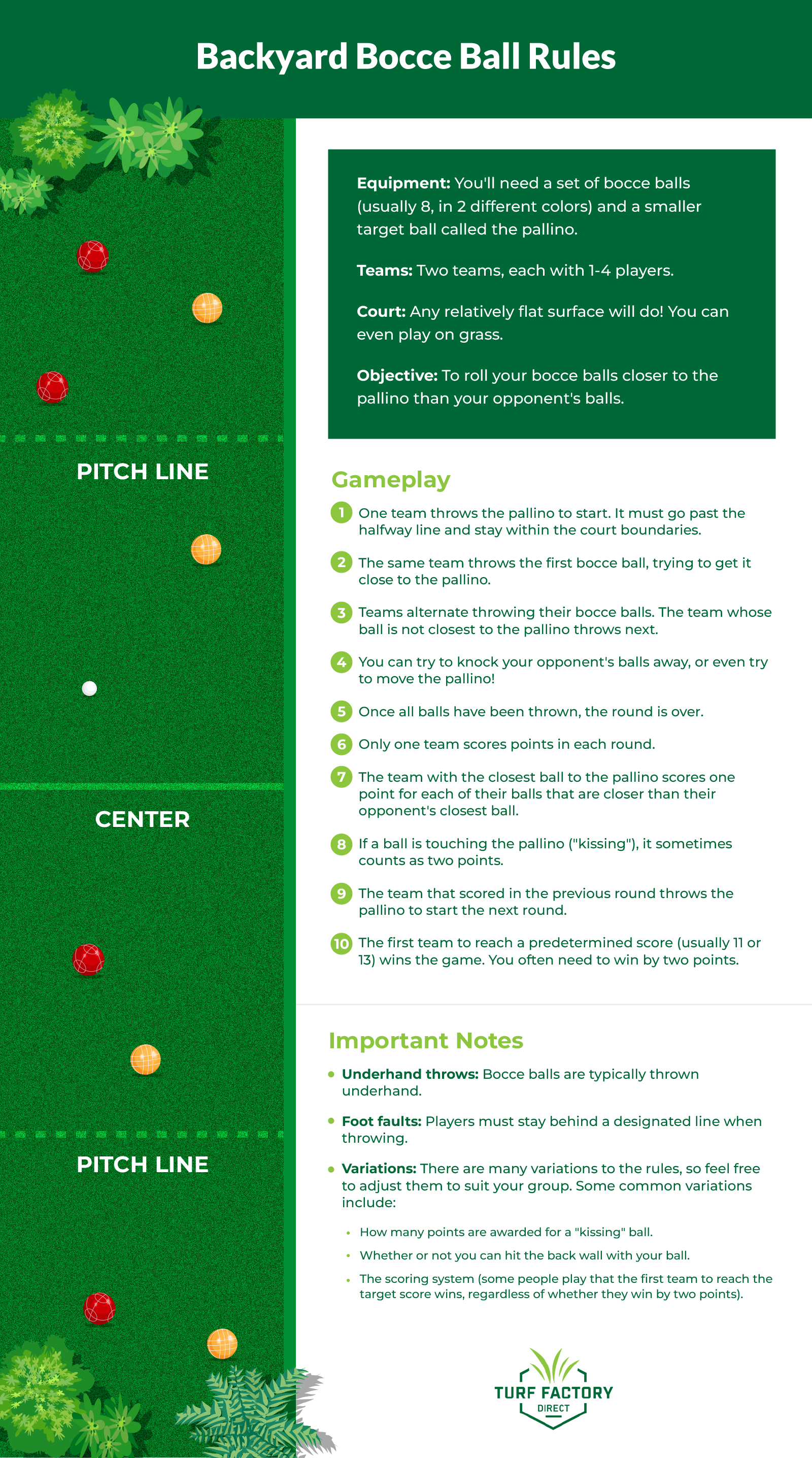
Traditionally, the pallino was placed in the center of the court for equal approach angles. However, 2026 champions defied this, opting for off-center placements that forced opponents into more difficult shots.
An off-center pallino limits direct approaches, forcing opponents to attempt wider angles or risk hitting other balls. A well-placed pallino can create a "pocket," making it difficult to land a ball without displacement and forcing the opposing team into a more aggressive game.
Effective pallino placement requires reading the court surface. Grass courts, being slower with more grip, favor controlled placements and spin. Clay courts are faster and cause balls to slide more easily. Synthetic surfaces offer a consistent roll but are sensitive to temperature and humidity. Experienced players adjust placement based on these factors.
Subtly shifting the pallino just a few inches off-center can create an almost imperceptible disadvantage for opponents. Small details matter; a strategically placed pallino can be the difference between winning and losing.
- Grass Courts: Slower, more grip – favor controlled placements and spin.
- Clay Courts: Faster, more slide – require precise aiming and power control.
- Synthetic Courts: Consistent roll – sensitive to temperature and humidity.
The Rise of the 'Spin Doctor'
Spin is no longer an afterthought in professional bocce ball. While traditionally used for minor adjustments, 2026 champions showed that mastering spin techniques can be a game-changer. This area saw significant skill advancements last year.
Topspin imparts forward rotation, causing the ball to grip the surface and stop quickly, ideal for aggressive approaches. Backspin creates a lifting force, causing the ball to float and land softly, useful for controlled stops. Sidespin creates a curving trajectory, allowing players to navigate around blocks or target specific areas.
Spin physics are straightforward: a spinning ball creates an air pressure difference, causing deviation from a straight path. Spin amount, ball velocity, and surface conditions influence trajectory. Mastering spin control requires understanding these factors. Marco Rossi of the "Italian Aces" is known for his precise spin manipulation.
Rossi demonstrated sidespin's power during the 2026 European Championships, consistently curving shots around opposing blocks to land within inches of the pallino. This showcased the technique’s potential.
Opponent Analysis: Reading Tells
Bocce ball is as much a mental game as a physical one. Understanding opponent tendencies and anticipating shots is crucial for success, requiring careful observation and the ability to "read tells" – subtle cues in stance, grip, and pre-throw routine.
A player’s stance reveals their intended shot: a wide stance suggests power, while a narrower stance indicates control. Grip also provides clues: a firm grip typically signals a direct shot, while a looser grip suggests a spin-focused approach. The pre-throw routine, including arm swing and body weight shift, can reveal target and power level.
Common tells for spin techniques include a slight wrist flick for sidespin and deliberate hand rotation for topspin or backspin. Recognizing these cues allows strategy adjustment. For example, anticipating an opponent’s sidespin enables strategic block positioning.
Reading an opponent is like playing poker: gathering information, deducing intentions, and making informed decisions based on incomplete data. Practice improves this ability, providing a significant edge.
Strategic Blocking: More Than Just Defense
Blocking is often seen as defensive, preventing opponent scores. However, 2026 champions showed strategic blocking controls the court, forces specific shots, and creates openings for one's own balls.
Different blocking formations counter various opponent strategies. A "wall’ formation blocks direct approaches, a ‘wedge’ formation disrupts positioning, and a ‘scatter" formation creates chaos and makes targeting difficult.
A well-placed block can force an opponent into a risky shot or concede a point. Anticipate opponent intentions and position blocks accordingly, considering how they affect the overall game.
The "Jersey Spinners" used blocks to funnel opponents into predictable paths, making their shots easier to anticipate and counter. They were masters of court control.
The 'Second Shot' Advantage
The team without the pallino often holds a significant advantage with their second shot. While the first team focuses on getting close, the second team can either get closer or disrupt opponent positioning. This is a crucial moment.
An aggressive second shot aims to get closer to the pallino, potentially taking the lead, requiring precision and power. A conservative second shot focuses on disrupting opponent positioning, forcing a more difficult approach through strategic blocking or displacing an opponent's ball.
undefinedreward balance is key. An aggressive shot has a higher potential payoff but also a higher risk of failure. A conservative shot is safer but may not yield a significant advantage. The optimal approach depends on the game situation, the opponent’s skill level, and your team’s strengths.
I’ve witnessed matches turn around on a single second shot. A perfectly placed block can completely change the momentum of the game. Don't underestimate the importance of this critical opportunity.
Team Communication: Silent Signals
Effective team communication is vital in bocce ball, but overt signaling is often prohibited by tournament rules. This forces teams to develop subtle ways to communicate strategy – eye contact, body language, and pre-throw routines.
Establishing a shared understanding of roles and responsibilities within the team is essential. Each player should know their strengths and weaknesses and be prepared to execute specific strategies. A cohesive team is incredibly hard to beat. A quick glance, a slight nod, a subtle shift in stance – these can all convey important information.
Developing a consistent pre-throw routine can also serve as a form of communication. For example, a player might touch their hat before attempting a spin shot, signaling to their teammate that they are about to use that technique. These signals need to be practiced and refined to ensure they are clear and unambiguous.
The best teams operate almost telepathically, anticipating each other’s moves and reacting instinctively. This level of coordination requires trust, practice, and a deep understanding of the game.
2026 Standout Techniques: A Recap
The 2026 bocce ball season demonstrated that success at the highest level requires a multifaceted approach. The key techniques employed by the winning teams included aggressive pallino placement, a mastery of spin, detailed opponent analysis, strategic blocking, and exploiting the second shot advantage.
We saw a clear trend towards more proactive play, with teams actively shaping the court to their advantage. Spin control emerged as a critical skill, allowing players to manipulate the ball’s trajectory and final position with incredible precision. Opponent analysis became more sophisticated, with players learning to read tells and anticipate their opponents’ shots.
Strategic blocking was no longer seen as purely defensive, but as a tool for controlling the court and creating opportunities. And finally, the second shot advantage was consistently exploited by teams that understood its potential. These techniques, when combined, created a formidable force.
Emerging trends include the increased use of data analytics to track shot patterns and identify weaknesses in opponents’ strategies. I expect to see this trend continue, with teams investing more resources in data analysis and performance optimization. Bocce ball is evolving, and the future promises even more exciting developments.
Techniques to Practice This Week
- Point & Shoot Accuracy - Master consistently placing your bocce balls close to the pallino. This is the foundation of a winning strategy.
- The Spock (Defensive Blocking) - Learn to strategically position your balls to protect the pallino and obstruct your opponent's throws. Effective blocking can control the court.
- Raffa Volo Technique - Incorporate the Raffa Volo throw, a lofted shot, to clear obstacles or reach difficult positions. This is a hallmark of advanced play.
- Strategic Banking - Utilize the sideboards to your advantage. Practice angles and force to accurately bank shots around opponents' balls.
- Opponent Ball Displacement - Develop the skill of knocking your opponent's balls out of scoring position with precise throws. This requires power and accuracy.
- Understanding Court Conditions - Analyze the playing surface (grass length, moisture, slope) and adjust your throws accordingly. Subtle changes can dramatically affect ball roll.
- Team Communication & Shot Calling - If playing doubles, establish clear communication with your partner to coordinate shots and maximize scoring opportunities.
No comments yet. Be the first to share your thoughts!