
The court and equipment
A standard bocce court is 76 feet long and 10 feet wide. While backyard games often use smaller spaces, these dimensions are the benchmark for serious play. You'll play on natural clay, grass, or synthetic turf, each of which changes how the ball rolls.
The choice of surface significantly impacts gameplay. Clay courts are slower and allow for more strategic curving of the ball, while synthetic surfaces tend to be faster and more predictable. Grass courts fall somewhere in between, often requiring adjustments based on the condition of the turf. The surface really shapes how you approach each throw.
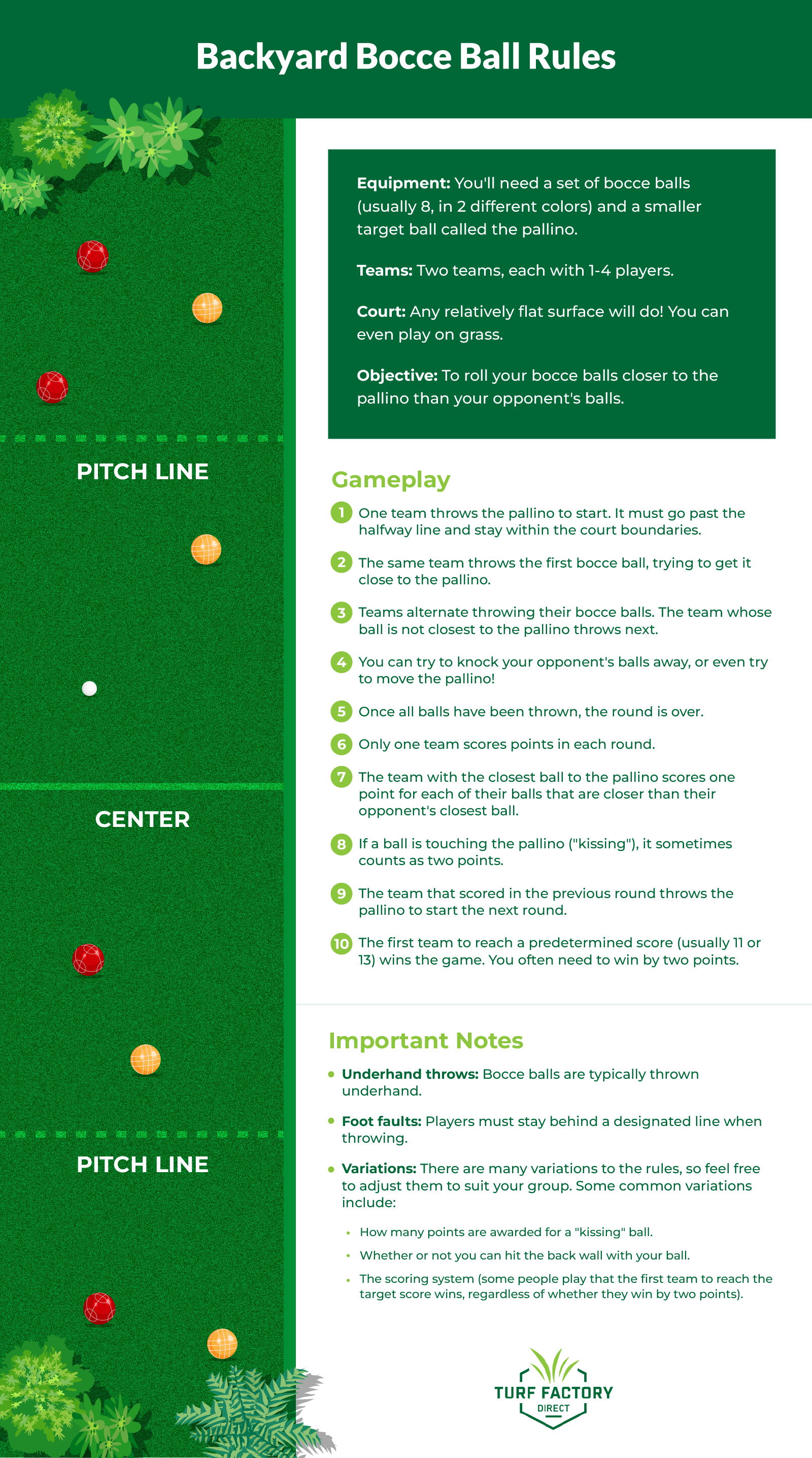
The game requires eight bocce balls, typically divided into two sets of four, with each set a different color – red, green, blue, and yellow are common. These balls are usually made of resin or a similar durable material and weigh between 8 and 9.6 ounces. You’ll also need one smaller, white ball called the pallino, or jack, which is about half the size of the bocce balls. Finally, a measuring tool – a tape measure or calipers – is essential for resolving close calls.
How scoring works
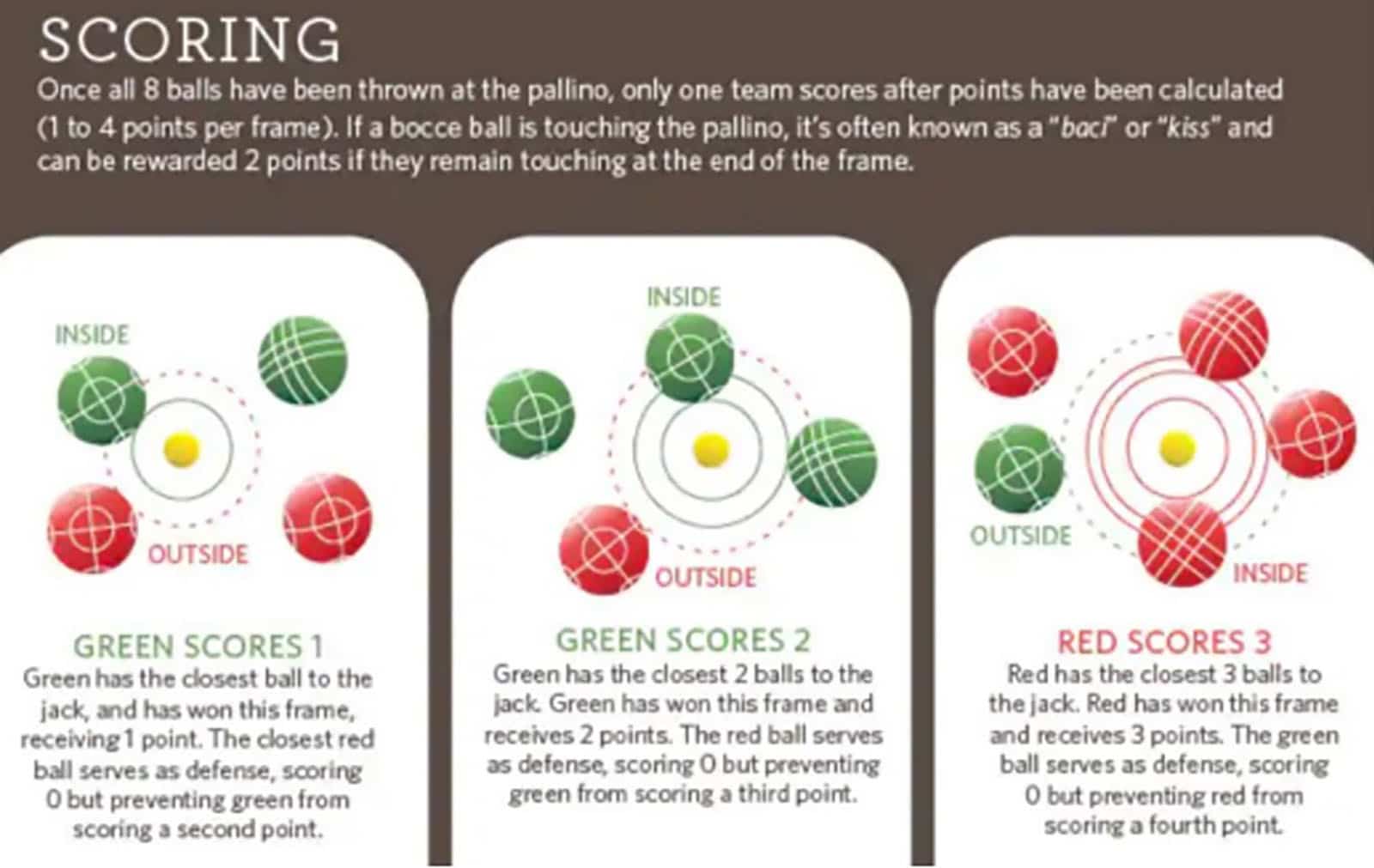
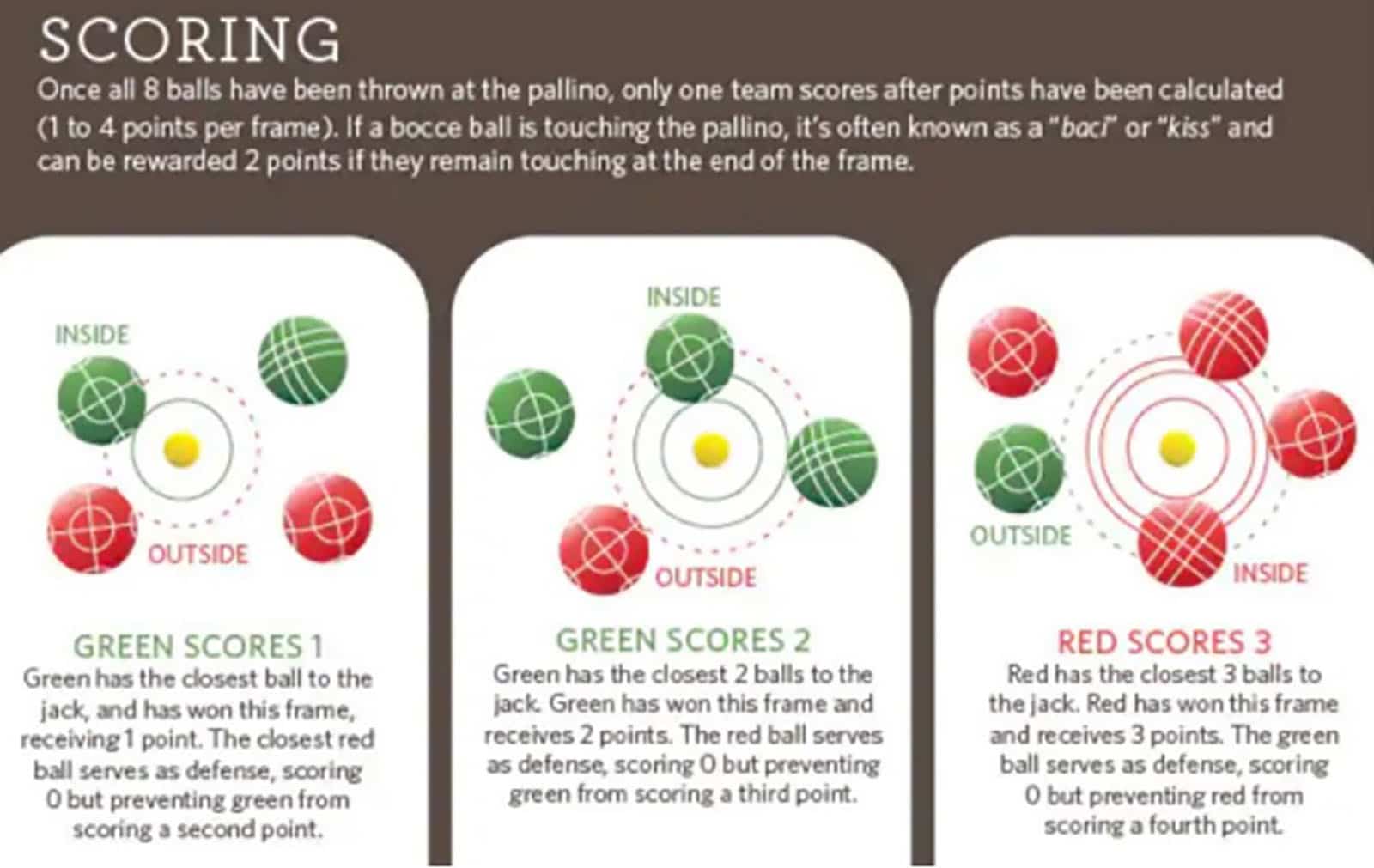
Scoring in bocce ball revolves around getting your balls closer to the pallino than your opponent’s. After all the balls have been thrown, the team with the ball closest to the pallino scores one point for each of its balls that are closer than the closest ball of the opposing team. It sounds straightforward, and it mostly is, but nuances matter.
The game is played in 'frames,' essentially rounds of throwing. At the start of each frame, a player from one team throws the pallino. Then, players from both teams alternate throwing their bocce balls, attempting to get them closer to the pallino. Once all eight bocce balls have been thrown, scoring for that frame takes place. Only one team scores per frame, even if they have multiple balls closer to the pallino than all of the opponent’s balls.
If two balls are exactly the same distance from the jack, the team that threw first gets the point. Most games go to 12 points, and you have to win by at least two. Use a tape measure or calipers for close calls to avoid the usual arguments over who is closer.
Fouls and ball placement
A valid bocce ball throw requires the player to remain within a designated throwing area, usually behind a foul line. Stepping over this line before releasing the ball is a common foul. Another foul occurs if a player throws a ball before the previous ball has come to rest. These rules are in place to ensure fair play and prevent accidental interference.
The foul line is typically marked with tape or paint and is positioned at the end of the court. Its exact location can vary, so it’s important to clarify it before the game starts. If a foul is committed, the opposing team usually gets to remove the illegally thrown ball from play, or award a point to the other team.
Penalties vary by league. In casual games, you might just redo the throw. In tournament play, an illegal throw often means the ball is removed from the court entirely. Check the specific house rules before the first frame.
Raffa vs. point styles
Many people assume bocce is just…bocce. But there are actually two main styles: Raffa and Point. Raffa, the more widely played version, emphasizes rolling the ball. Players typically aim to get close to the pallino with a controlled roll, focusing on accuracy and finesse. It’s the style you’ll see most often in casual backyard games.
Point bocce, on the other hand, allows players to throw the ball with spin, even underhand. This adds a different dimension to the game, allowing for more aggressive strategies and the potential to displace other balls. It's more common in certain regions of Italy and among dedicated players.
Scoring is largely the same in both styles – proximity to the pallino determines points. However, the strategies differ considerably. Raffa players focus on precise placement, while Point bocce players often attempt to knock opponents’ balls out of position. It's important to know which style you’re playing, as it affects the tactics you employ. Many casual players don’t even realize these distinctions exist.
- Raffa: The most common style, where you roll the ball with a palm-down release.
- Point: Allows throwing with spin for strategic displacement.
Raffa vs. Point Bocce: A Comparative Overview
| Feature | Raffa | Point | Typical Playing Surface |
|---|---|---|---|
| Throwing Style | Underhand, with spin often emphasized | Generally underhand, but spin is less critical | Both |
| Ball Material | Typically made of resin or plastic, often with a textured surface | Traditionally metal (often brass or steel), sometimes composite | Both |
| Scoring Emphasis | Precision and strategic placement; 'accosto' (hitting the pallino) is key | Proximity to the pallino; simpler direct throws are effective | Both |
| Ball Size | Approximately 90mm diameter | Approximately 80-105mm diameter (varies more widely) | Both |
| Common Region | Popular in Italy and areas with strong Italian-American communities | Widespread in the United States and other regions globally | Both |
| Court Surface | Crushed oyster shells, clay, or synthetic materials | Grass, sand, or compacted dirt | Both |
| Gameplay Style | More tactical and nuanced; requires greater skill in spin and shot selection | More accessible to beginners; emphasizes consistent throws | Both |
Qualitative comparison based on the article research brief. Confirm current product details in the official docs before making implementation choices.
Strategy beyond proximity
While simply getting close to the pallino is important, mastering bocce involves a deeper understanding of strategy. 'Spocking' – knocking the pallino away from a cluster of balls – is a risky but potentially rewarding tactic. It can disrupt your opponent’s setup and create new scoring opportunities.
'Pointing' – deliberately placing your balls close to the pallino – is a more conservative approach, focused on building a solid scoring position. 'Blocking' – strategically placing balls to prevent your opponents from getting close – is another key defensive tactic. I've found that a good mix of these strategies is often the most effective.
Reading your opponent’s throws is crucial. Pay attention to their tendencies – do they favor pointing, spocking, or a more balanced approach? Anticipating their strategy allows you to counter their moves and gain an advantage. For example, if they consistently try to spock, you might position your balls to minimize the impact of their throws. It’s a game of chess as much as it is a game of skill.
Official rules and variations
The United States Bocce Federation and Bocce Builders of America provide the standard regulations for court construction and tournament play. These sources are the best bet if you want to move beyond backyard rules.
It's important to remember that 'house rules' are common, especially in casual games. These variations can include adjustments to scoring, court dimensions, or even throwing styles. The key is to agree on the rules before starting the game to avoid confusion and disagreements. Don’t be afraid to clarify any ambiguities.
While official rules provide a framework for fair play, the spirit of bocce is about friendly competition and enjoyment. Don’t let strict adherence to the rules overshadow the fun. Ultimately, the best rules are the ones that everyone agrees on and that make the game enjoyable for all participants.
Bocce Ball Scoring Challenge: Test Your Knowledge!
Now that you've reviewed the scoring rules, let's put your understanding to the test! This quiz presents common bocce ball scenarios. Determine which team scores, and how many points they earn. Remember, only balls closer to the pallino than the opponent's closest ball score.
Bocce Resources
- United States Bocce Federation (USBF) - The national governing body for bocce in the United States. They offer rulebooks and information on sanctioned tournaments.
- American Bocce Ball Association (ABBA) - Another prominent organization providing rule sets, tournament information, and resources for players.
- Bocce Builders of America - A resource for bocce court construction and equipment, often linking to official rule interpretations.
- Federazione Italiana Bocce (FIB) - The Italian Bocce Federation. While in Italian, it represents the historical origin and a highly refined rule set for the sport.
- World Bocce Confederation (CIB) - The international governing body, providing rules and regulations for international competitions.
- Official Bocce Rulebook (USBF) - A downloadable PDF detailing the official rules of play as recognized by the USBF. Regularly updated.
- Tournament Rule Variations - Be aware that many local and regional tournaments may have slight variations to the official rules. Always check the specific tournament guidelines.
- Important Disclaimer: Many casual bocce games utilize 'house rules'. These are acceptable for recreational play, but will differ from official scoring and gameplay.
No comments yet. Be the first to share your thoughts!