
Official Bocce Court Layout
A regulation bocce ball court is a carefully defined space with specific dimensions. For the 2026 tournament standards, the court must adhere to strict guidelines to ensure fair play and consistency. Ignoring these can lead to disqualification in competitive matches.
The standard court length is 90 feet, and the width is 13.5 feet. Adequate run-off space around the court is also important for player safety and to prevent balls from rolling into unwanted areas.
Beyond the playing surface, you need at least 6 feet of clear space on all sides of the court. This provides room for players to comfortably throw and follow their balls without bumping into obstacles. A well-defined court with sufficient run-off space is the foundation of any good bocce experience.
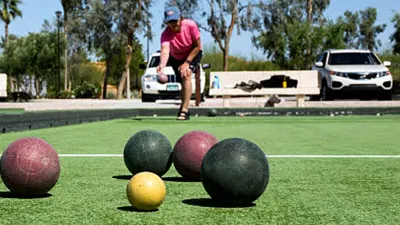
A complete bocce ball game set includes eight 90mm bocce balls (two of each color: red, green, blue, and yellow) and one 50mm white pallino ball (the jack). A distance marker and carrying case are also typically included. Understanding these components is the first step towards building or setting up your court.
Length and Width Specifications
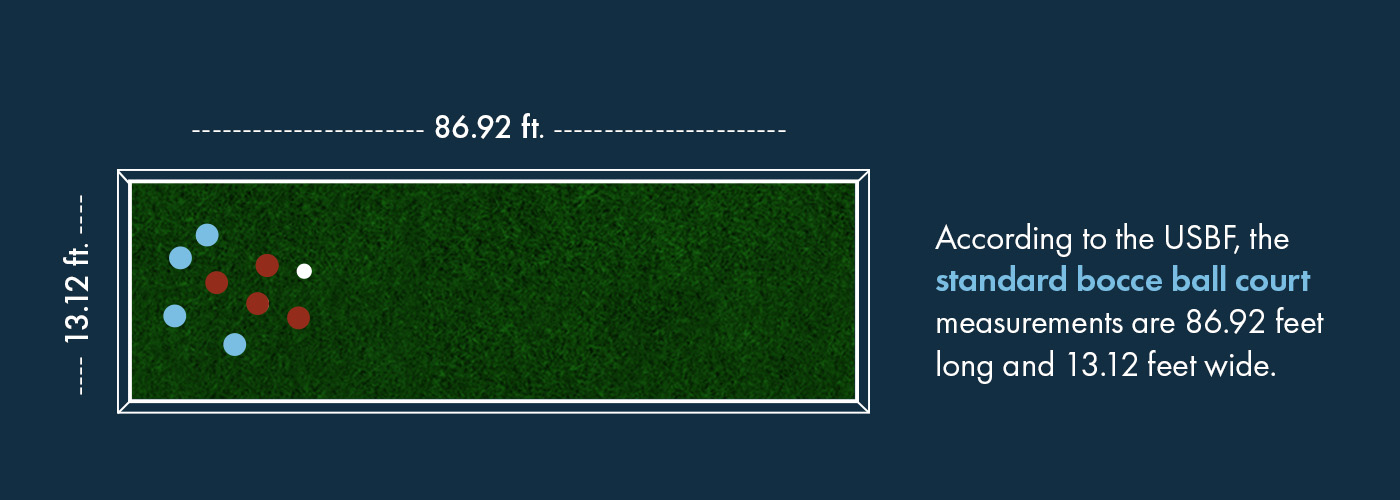
The official length of a bocce ball court is 90 feet. This is a non-negotiable measurement for tournament play. The width is 13.5 feet. While some slight variations might be tolerated in recreational settings, sticking to this dimension is best practice. These dimensions create a balanced playing field.
Precise measurements are important. A court that’s even a few feet too short or too narrow can significantly alter gameplay. For example, a shorter court reduces the strategic element of long-range shots, while a narrower court makes it harder to execute precise placements.
Tournament regulations generally allow for a tolerance of a few inches, but it's always best to be as accurate as possible. Use a measuring tape and double-check your measurements before starting a game. Don’t rely on estimates. A truly level court is also essential for consistent ball roll.
Surface Materials: What Works Best?
Choosing the right surface material is important for a quality bocce ball court. Several options are available, each with its own advantages and disadvantages. Clay is a traditional choice, providing a smooth and consistent roll, but it requires significant maintenance to keep it level and free of debris. Crushed stone offers good drainage but potentially a less predictable roll.
Synthetic surfaces offer a low-maintenance alternative to natural materials. These surfaces are often made from polypropylene or other durable plastics and can mimic the feel of clay. Sand is another possibility for recreational courts, but it can be easily disturbed and may not provide the same level of precision as other materials. The right choice depends on your budget, maintenance capabilities, and desired playing experience.
Here’s a quick comparison of common surface materials:
The surface impacts ball speed and accuracy. A smoother surface like well-maintained clay allows for faster rolls and more precise shots. A rougher surface, like crushed stone, will slow the ball down and make it harder to control. Serious players will want a surface that allows for maximum control and consistency.
- Clay: Traditional, smooth roll, high maintenance
- Crushed Stone: Good drainage, less predictable roll, moderate maintenance
- Synthetic Surfaces: Low maintenance, consistent roll, higher initial cost
- Sand: Inexpensive, easy to install, less precise roll, requires frequent leveling
Bocce Ball Court Surface Comparison: Considerations for Play & Tournament Standards
| Surface Type | Initial Installation | Ongoing Maintenance | Ball Roll & Feel | Weather Impact | Player Comfort | Tournament Acceptance |
|---|---|---|---|---|---|---|
| Clay | Moderate | High - Requires frequent rolling, watering, and repair of imperfections | Slower, more predictable roll; favors strategic placement | Susceptible to rain, puddling, and drying/cracking | Can be dusty when dry; generally comfortable | Commonly accepted, traditional choice |
| Crushed Stone | Lower | Moderate - Requires periodic raking and topping off; potential for settling | Faster, more varied roll; can be less predictable | Good drainage, less affected by rain, but can get hot in direct sun | Can be harder on the feet; requires good footwear | Frequently accepted, but stone size/shape may be regulated |
| Synthetic | Higher | Lower - Primarily requires cleaning; minimal ongoing maintenance | Consistent, predictable roll; often faster than clay | Excellent weather resistance; unaffected by rain or sun | Generally comfortable, can be customized for feel | Increasingly accepted; check tournament rules for approved materials |
| Sand | Lowest | Moderate - Requires frequent raking and leveling; prone to shifting | Very fast roll; requires precise control | Excellent drainage, but can be easily dispersed by wind | Very comfortable, soft underfoot | Less common for official tournaments; may be permitted with specific conditions |
| Resin (Acrylic) | Moderate to High | Low - Easy to clean and maintain | Fast and consistent roll | Highly weather resistant | Comfortable, similar to synthetic | Growing in popularity for tournament play; check specific regulations |
Qualitative comparison based on the article research brief. Confirm current product details in the official docs before making implementation choices.
Run-Off Zones and Safety
The surrounding run-off zones are equally important for safety. A minimum of 6 feet of clear space around the court is recommended, but more is better. This space allows players to move freely without bumping into obstacles and prevents errant balls from causing damage or injury.
Potential hazards to avoid include fences, trees, and other obstructions near the court. These can interfere with gameplay and pose a safety risk. Ensure the ground surrounding the court is level and free of tripping hazards. Uneven terrain can lead to falls and injuries.
Consider the trajectory of thrown balls when assessing potential hazards. Balls can travel a significant distance, so have enough clear space to accommodate them. A well-planned run-off zone will enhance safety and improve the overall playing experience.
Pallino Placement Zone
The pallino, or jack, is the target in bocce ball, and its placement is governed by specific rules. The pallino placement zone is a rectangular area at one end of the court, 2 feet wide and 6 feet long, centered on the midpoint of the court's width.
The pallino must be thrown within this zone to be considered a legal throw. If it lands outside the zone, the opposing team can either accept the throw or require it to be re-thrown. This rule ensures a fair start to each frame.
Players must stand behind a designated foul line when throwing the pallino. This line is typically located a few feet behind the pallino placement zone. Crossing this line results in a foul, and the throw is invalidated. Accuracy and adherence to these rules are vital for a competitive game.
Court Marking and Boundaries
Clearly marking the boundaries of a bocce court is essential for fair play. Boundary lines should be visible and easy to understand. Acceptable marking materials include paint, tape, or landscaping timbers. White is the most common color for boundary lines, providing good contrast against most surfaces. Choose a material that is durable and weather-resistant.
The lines should be straight and accurately positioned to define the playing area. A slight
Some courts also include markings for the pallino placement zone and the foul line. These markings can help players understand the rules and ensure fair play. While not strictly required for recreational play, they are essential for tournament-level competition. A well-marked court demonstrates a commitment to the game.
Adapting Courts for Limited Space
Let's face it: not everyone has 90 feet of backyard space. If you're limited on room, you can adapt the court dimensions for recreational play. However, it's important to understand that a shortened or narrowed court will not meet tournament standards. A common compromise is to reduce the length to 60 or 70 feet, while maintaining the 13.5-foot width.
Reducing the width is also an option, but it can significantly impact gameplay. A narrower court makes it more difficult to execute precise shots and can lead to more collisions between players. If you do shorten the court, make sure to adjust your gameplay accordingly. Focus on strategy and accuracy over power.
What’s not allowed in tournament play is deviating from the official dimensions. Any court that doesn't meet the 90 x 13.5 foot requirement will be ineligible for sanctioned competitions. Keep this in mind if you have aspirations of playing at a competitive level. However, for casual enjoyment, some modification is perfectly acceptable.
- Step 1: Measure your available space.
- Step 2: Determine the maximum length and width you can accommodate.
- Step 3: Adjust your gameplay to suit the smaller court.
- Step 4: Clearly mark the boundaries of the adapted court.
Common Court Setup Mistakes
Setting up a bocce court might seem straightforward, but it's easy to make mistakes. One common error is building the court on uneven ground. This can cause the balls to roll unpredictably and make it difficult to play a fair game. Always ensure the surface is level before starting construction. I’ve seen too many courts with noticeable slopes.
Another frequent mistake is failing to provide adequate run-off space. This can lead to injuries and damage to property. Remember, you need at least 6 feet of clear space around the court. Ignoring the pallino placement zone is also a problem. Make sure you understand the rules regarding pallino placement and mark the zone accordingly.
Finally, many people underestimate the importance of clear boundary lines. Faint or poorly defined lines can cause confusion and disputes during gameplay. Take the time to mark the boundaries clearly and accurately. A little attention to detail can go a long way towards ensuring a fun and successful bocce experience.
- Building on uneven ground
- Insufficient run-off space
- Incorrect pallino placement zone
- Poorly defined boundary lines

No comments yet. Be the first to share your thoughts!