

Bocce Ball Rules for Beginners: Complete 2024 Guide to Playing Like a Pro - Part 1
Understanding the Fundamentals of Bocce Ball
Bocce ball stands as one of the world's oldest and most beloved lawn games, with roots stretching back to ancient Rome. In 2024, this timeless sport continues to captivate players of all ages across the globe. Whether you're planning a backyard gathering or looking to join a competitive league, mastering the basic bocce ball rules is your first step toward playing like a seasoned professional.
The beauty of bocce lies in its simplicity combined with strategic depth. At its core, the objective is straightforward: throw your team's balls closer to the small target ball, called the pallino, than your opponents can manage. However, the tactical elements that emerge during gameplay create endless possibilities for skillful maneuvering and competitive excitement.

Essential Equipment and Setup
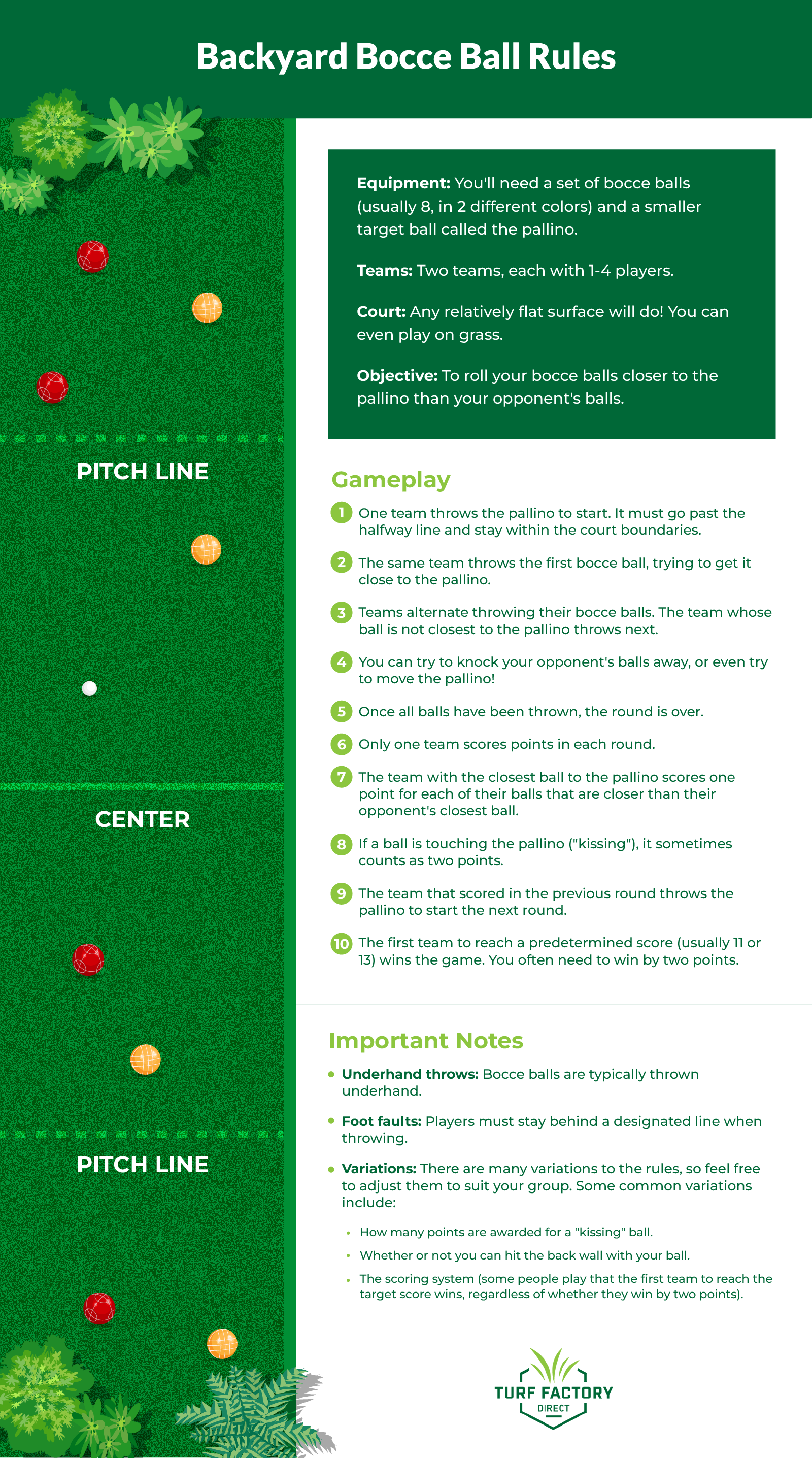
Before diving into gameplay mechanics, understanding your equipment is crucial for learning bocce ball effectively. A regulation bocce set consists of eight large balls and one smaller pallino. The eight large balls are divided into two sets of four, typically distinguished by different colors or patterns to identify each team's balls during play.
Modern bocce balls come in various materials, each offering distinct advantages. Traditional wooden balls provide excellent grip and control, while metal balls offer durability and consistent weight distribution. Baked clay balls deliver a classic feel, and plastic options work well for casual play and beginners. Unlike lawn bowls, bocce balls maintain perfect spherical shapes without any built-in bias, ensuring fair and predictable rolling patterns.
The pallino, also known as the jack or target ball, measures smaller than the playing balls and serves as the focal point of each round. This small white or yellow ball determines where players aim their throws and ultimately decides scoring outcomes.
Team Formation and Player Roles
Bocce ball accommodates flexible team configurations, making it perfect for various group sizes. You can play individually in one-on-one matches, or form teams of two, three, or four players. The number of balls each player throws depends on team size, ensuring everyone gets equal participation opportunities.
In four-player teams, each member throws one ball per round, creating dynamic team strategies and shared responsibility. Three-player teams typically have one player throw two balls while the others throw one each. Two-player teams see each participant throwing two balls, allowing for more individual control and strategic planning. Solo play involves each player throwing four balls, testing personal skill and consistency.
Court Specifications and Playing Surface
Understanding proper court dimensions enhances your bocce ball guide knowledge significantly. Official bocce courts measure 90 feet long by 13 feet wide, though recreational play adapts to available space. The playing surface should be level and provide consistent ball rolling characteristics.
Traditional courts feature packed earth, sand, or crushed stone surfaces that offer controlled ball movement. However, bocce adapts well to grass lawns, concrete patios, or even indoor gymnasium floors. The key requirement is a relatively smooth, level surface that allows balls to roll predictably without excessive bouncing or irregular deflection.
Court boundaries help contain balls and define fair play areas. While professional courts include raised borders or wooden frames, recreational games often use natural boundaries like sidewalks, garden edges, or temporary markers.
Basic Gameplay Flow
Learning bocce ball begins with understanding the fundamental game sequence. Each round starts with determining which team throws the pallino first, typically decided by coin toss or previous round results. The team winning the pallino toss throws it to establish the target position, then delivers their first ball toward the pallino.
The opposing team then attempts to place their balls closer to the pallino than the first team's ball. This alternating pattern continues until all eight balls are thrown, creating the foundation for scoring and strategic decision-making.
Teams may employ various throwing techniques during play, including pointing (rolling balls close to the pallino), hitting (knocking opponent balls away), and spocking (hitting the pallino to change its position). These tactical options transform simple ball-rolling into sophisticated strategic gameplay that rewards both precision and planning.
Step-by-Step Guide to Playing Bocce Ball
Learning bocce ball rules becomes straightforward when you follow a systematic approach. This step-by-step guide will walk you through every phase of gameplay, from initial setup to scoring your first points.
Setting Up Your Bocce Ball Game
Before you can master bocce ball rules, proper setup is essential. Choose a flat playing surface approximately 60 feet long and 12 feet wide for regulation play, though smaller spaces work perfectly for casual games. Mark clear boundaries using chalk, rope, or natural landmarks like trees or garden edges.
Divide players into two teams, with each team receiving four bocce balls of the same color or pattern. One team gets the pallino, which they'll use to start the game. Position all players behind the throwing line at one end of the court.
The Opening Throw and Pallino Placement
The team that wins the coin toss or is chosen to start throws the pallino first. This small target ball must travel at least halfway down the court and stay within the side boundaries. If the pallino goes out of bounds or doesn't reach the minimum distance, the opposing team gets the opportunity to throw it.
Once the pallino is properly positioned, the same team that threw it delivers the first bocce ball. This opening throw establishes the initial point of reference for all subsequent throws in that frame.
Understanding the Throwing Sequence
After the opening team throws their first ball, the opposing team takes their turn. The team whose ball is farthest from the pallino continues throwing until they either get closer to the target or run out of balls. This alternating pattern continues until all eight balls have been thrown.
Players must throw from behind the designated line and cannot step over it during their delivery. The most common throwing techniques include underhand rolling, which provides better accuracy for beginners, and the more advanced pointing and hitting strategies used by experienced players.
Scoring Your First Points
Scoring in bocce ball follows a simple proximity principle. After all balls are thrown, only the team with the ball closest to the pallino scores points. They receive one point for each of their balls that is closer to the pallino than the opposing team's closest ball.
Measure distances carefully when balls appear close together. Use a measuring tape or string for precise determination. The maximum points a team can score in one frame is four, which occurs when all their balls are closer to the pallino than any opposing ball.
Essential Bocce Ball Rules Checklist
Successful bocce ball play requires attention to several key rules and procedures. Use this comprehensive checklist to ensure you're following proper bocce ball rules during every game.
Common Questions About Bocce Ball Rules
New players often have similar questions when learning bocce ball rules. Understanding these frequently asked questions will help clarify any confusion and improve your overall game experience.
Remember that bocce ball rules may vary slightly depending on your location or the specific league you join. However, these fundamental principles apply to most casual and recreational games. Focus on developing consistent throwing technique and understanding basic strategy before worrying about advanced rule variations.
The beauty of bocce ball lies in its accessibility – while the rules are simple enough for beginners to learn quickly, the strategic depth keeps experienced players engaged for years. Practice these basic rules in your backyard or local park, and you'll soon discover why this ancient game continues to captivate players worldwide.
Advanced Strategies and Common Mistakes
Mastering bocce ball rules forms just the foundation of becoming a skilled player. The most successful bocce players develop strategic thinking that goes beyond basic gameplay mechanics. Understanding when to play aggressively versus defensively can dramatically improve your performance on the court.
Strategic Shot Selection
The pointing strategy involves placing your balls as close to the pallino as possible. This fundamental approach works best when you have the first throw or when the pallino sits in an open position. Advanced players often aim for specific zones around the pallino rather than attempting to touch it directly, as this provides better scoring opportunities.
Hitting or knocking represents the aggressive approach in bocce ball rules. Use this strategy when opponents have balls positioned advantageously near the pallino. A well-executed hit can remove opposing balls while potentially moving your own into scoring position. However, this technique requires significant practice to master effectively.
Blocking tactics involve placing your balls strategically to prevent opponents from accessing the pallino. This defensive strategy works particularly well on narrower courts or when the pallino rests near boundaries. Consider blocking when you already hold advantageous positions and want to protect your lead.
Court Awareness and Positioning
Understanding court dynamics significantly impacts your bocce ball performance. Different court surfaces affect ball behavior differently. Clay courts provide more predictable rolls but require adjustment for surface irregularities. Grass courts introduce variables like moisture and terrain changes that influence ball trajectory.
Wind conditions also affect outdoor bocce games. Learn to compensate for crosswinds by adjusting your throwing angle and force. Experienced players often test wind direction with practice throws before official gameplay begins.
Common Beginner Mistakes to Avoid
Many newcomers learning bocce ball rules make predictable errors that limit their improvement. Throwing too hard ranks as the most frequent mistake. Bocce requires finesse rather than power. Focus on controlled, smooth releases that allow for precise ball placement.
Poor foot positioning affects accuracy significantly. Always establish a stable stance with your non-throwing foot planted firmly. Your throwing motion should flow naturally from your established position without requiring balance adjustments mid-throw.
Neglecting the pallino represents another common oversight. Many beginners focus exclusively on their balls without considering pallino movement. Remember that moving the pallino can completely change scoring dynamics, sometimes more effectively than perfect ball placement.
Inadequate team communication creates unnecessary confusion during team play. Establish clear signals and discuss strategy between frames. Effective teams coordinate their shots to maximize scoring opportunities rather than playing independently.
Developing Your Bocce Ball Skills
Consistent practice remains the most effective method for improving your bocce ball game. Start with basic pointing exercises, focusing on accuracy over distance. Set up targets at various distances and practice hitting them consistently before advancing to more complex shots.
Join local bocce leagues or clubs to gain experience against diverse playing styles. Different opponents present unique challenges that help develop adaptability and strategic thinking. Many communities offer beginner-friendly leagues specifically designed for those learning bocce ball rules.
Study professional bocce matches when possible. Observing experienced players reveals advanced techniques and strategic approaches that enhance your understanding of the game. Pay attention to their shot selection, positioning, and team coordination.
Regular equipment maintenance ensures consistent performance. Clean your bocce balls after each session and store them properly to prevent damage. Well-maintained equipment provides predictable behavior that supports skill development.
Remember that bocce ball combines physical skill with mental strategy. Developing both aspects equally creates the foundation for long-term improvement and enjoyment of this timeless sport.
No comments yet. Be the first to share your thoughts!